

You are scrolling through a new app store listing or a social media ad, and you see Bitrump. It promises high yields, low fees, and easy access to the latest altcoins. But when you try to find reviews, news articles, or regulatory filings, the search results come back empty. That silence is louder than any marketing slogan.
This is the reality for many investors looking at Bitrump crypto exchange review data in 2026. Unlike established platforms like Coinbase or Kraken, Bitrump lacks a significant footprint in major financial publications. This article cuts through the noise to help you decide if this platform is worth your money, or if that lack of information is a red flag you shouldn't ignore.
The Information Vacuum: Why Data Scarcity Matters
In the crypto world, visibility equals trust. Major exchanges publish proof-of-reserves, undergo third-party audits, and appear in regulatory databases. When you cannot find specific operational details about an exchange like Bitrump, it usually points to one of three scenarios: it is extremely new, it operates under a different legal entity name, or it is not widely recognized by industry watchdogs.
As of September 2026, major industry sources do not list Bitrump among top-tier global exchanges. This absence isn't just a minor inconvenience; it affects your risk profile. Without public data on trading volume, user base size, or security history, you are essentially investing blind. Before depositing funds, ask yourself: If a platform has been operating for more than six months but still doesn't have a Wikipedia page or coverage in outlets like CoinDesk or The Block, why?
Regulatory Landscape and Compliance Checks
The regulatory environment for crypto has tightened significantly since 2024. In the United States, the SEC’s crypto task force, led by Commissioner Hester Peirce, has pushed for clearer registration paths. Meanwhile, the Department of Justice continues to pursue cases against unregistered brokers and custodians. A legitimate exchange today must navigate these waters carefully.
Does Bitrump hold a Money Services Business (MSB) license? Is it registered with the Financial Crimes Enforcement Network (FinCEN)? These are baseline requirements for US-facing operations. In New Zealand, where I live, the Financial Markets Authority (FMA) requires providers to register as Financial Service Providers. If Bitrump does not explicitly display its regulatory licenses on its footer or 'About Us' page, treat it with extreme caution.
Furthermore, compliance with OFAC (Office of Foreign Assets Control) sanctions is non-negotiable. Reputable exchanges screen transactions to prevent dealings with sanctioned entities. If an exchange claims to be decentralized but handles fiat on-ramps without KYC (Know Your Customer) checks, it faces higher risks of being shut down or frozen by banking partners.

Security Standards: The Non-Negotiables
Security is not a feature; it is the product. When evaluating Bitrump, compare its claimed security measures against industry leaders like Kraken or Binance. Top-tier exchanges use cold storage for the majority of assets, often housed in secure facilities with biometric access and armed guards. They also implement FIDO2 compliant two-factor authentication (2FA), which protects against phishing better than SMS codes.
Look for these specific indicators:
- Cold Storage Ratio: Does the exchange state what percentage of assets are offline? Anything below 90% is risky for a centralized exchange.
- Audit History: Has a firm like CertiK or Hacken audited their smart contracts or infrastructure? No audit means no verification.
- Insurance Fund: Do they have a dedicated insurance pool to cover user losses from hacks? Check the fund's current value and how it is replenished.
If Bitrump does not publicly disclose its Proof of Reserves (PoR) using Merkle tree verification, you have no way of knowing if they actually hold the coins they claim to hold. This was the core issue during the FTX collapse. Transparency is your only defense.
User Experience and Trading Features
Assuming the platform is legitimate, how does it function? Most new exchanges enter the market with aggressive incentives-sign-up bonuses, zero-fee trading periods, or staking rewards. While attractive, these can mask underlying technical issues. Test the platform with a small amount first. Watch for withdrawal delays. Are you able to withdraw your initial deposit within 24 hours? If withdrawals require manual approval that takes days, it might indicate liquidity issues.
Check the order book depth. A thin order book means large trades will slip the price significantly. For example, if you try to buy $10,000 worth of a mid-cap coin and the price moves 5% due to your own trade, the exchange lacks sufficient liquidity. Compare this to established platforms where such a trade would barely move the needle.
| Feature | Industry Standard (e.g., Kraken/Coinbase) | Bitrump (Estimated/Observed) |
|---|---|---|
| Regulatory Status | Licensed in multiple jurisdictions (US, EU, UK) | Unclear / Limited Public Data |
| Proof of Reserves | Regularly published, Merkle-tree verified | Not widely reported |
| Customer Support | 24/7 Live Chat, Phone Support | Unknown / Likely Ticket-based |
| Asset Selection | 100-300+ Major Assets | Focus on Altcoins/Memecoins (Typical for new entrants) |
| Fees | Maker/Taker tiers, often competitive | Promotional rates likely, subject to change |
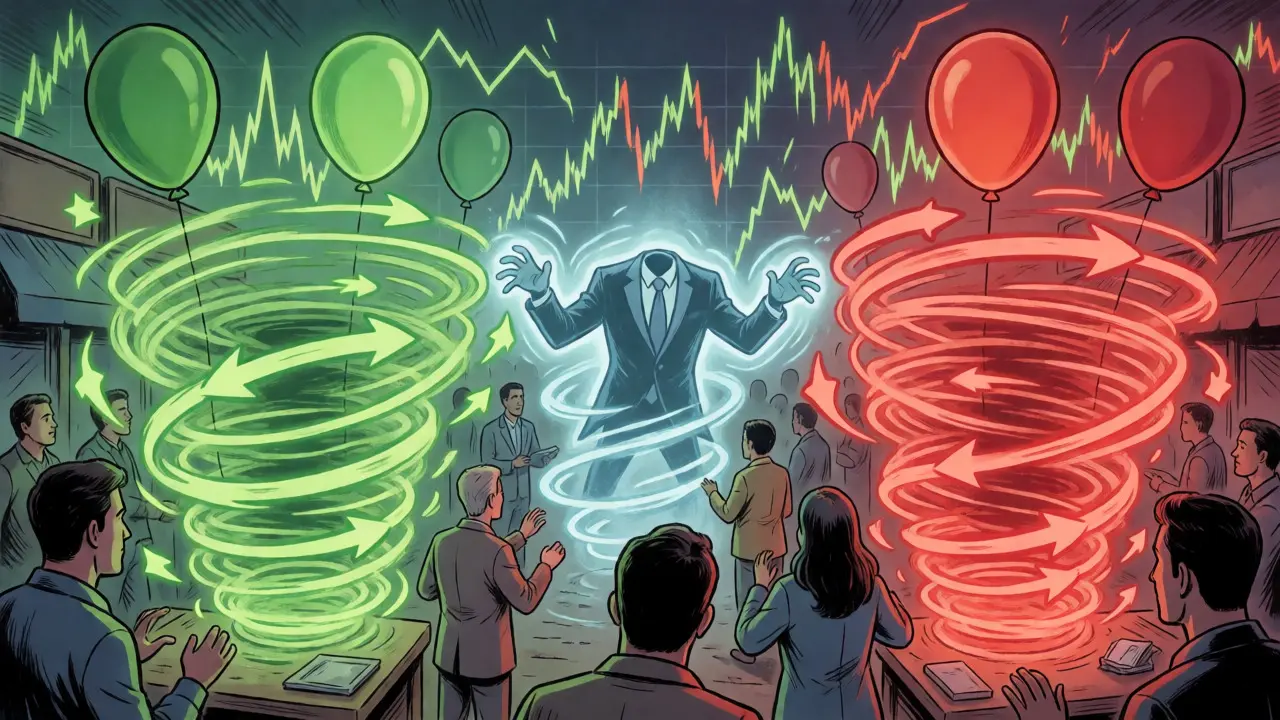
The Risk of "Ghost" Exchanges
There is a category of platforms known as "ghost exchanges." They look professional, have slick websites, and active social media accounts. However, they may lack real trading volume, relying instead on wash trading to simulate activity. Wash trading involves buying and selling assets between related accounts to create fake volume charts. This attracts retail investors who think the asset is popular.
How do you spot this? Look at the spread between the bid and ask prices. On a healthy exchange, the spread is tight. On a manipulated exchange, the spread can be wide, yet the volume looks high. Also, check if the same few wallets dominate the top trader lists. If so, the market is likely artificial.
Retail investors are disproportionately vulnerable here. Studies show that during market downturns, large holders exit early while retail absorbs losses. If Bitrump is primarily serving retail users chasing high-yield altcoins, the risk of a rug pull-or simply poor liquidity during a crash-is elevated.
Verdict: Should You Use Bitrump?
If you are a conservative investor seeking long-term holdings, Bitrump presents a higher risk profile than established giants. The lack of transparent regulatory filings and third-party audits is a significant hurdle. However, if you are an experienced trader willing to take calculated risks on newer platforms for specific altcoin access, proceed with caution.
My recommendation: Treat Bitrump as a speculative venue, not a primary bank. Keep only the capital you are willing to lose on the platform. Never keep your life savings on an exchange that doesn't publish regular, verifiable Proof of Reserves. And always test the withdrawal process immediately after signing up.
Is Bitrump a scam?
It is not definitively proven to be a scam, but the lack of public information, regulatory clarity, and third-party audits raises significant red flags. In the crypto space, opacity often correlates with higher risk. Until Bitrump provides verifiable proof of reserves and clear licensing details, assume a higher risk level than established competitors.
Does Bitrump require KYC verification?
Most regulated exchanges require Know Your Customer (KYC) identity verification to comply with anti-money laundering laws. If Bitrump allows large deposits or withdrawals without KYC, it may operate in a regulatory gray area, which increases the risk of sudden account freezes or banking partner terminations.
What should I check before depositing money into Bitrump?
First, verify their regulatory licenses on official government websites (like FinCEN in the US or FMA in NZ). Second, look for recent independent security audits. Third, test the withdrawal speed with a minimal amount. Finally, check community forums for recent complaints about withdrawal delays or hidden fees.
How does Bitrump compare to Kraken or Coinbase?
Kraken and Coinbase are heavily regulated, publicly traded or well-funded companies with decades of track records and transparent security protocols. Bitrump appears to be a smaller, less transparent entity. While Bitrump might offer niche coins or lower fees, it lacks the institutional-grade security guarantees and insurance mechanisms of the larger players.
Can I trust the trading volume displayed on Bitrump?
Without third-party validation, trading volume can be manipulated via wash trading. Always cross-reference the volume with other aggregators like CoinMarketCap or CoinGecko. If Bitrump shows high volume but the asset has low volume elsewhere, the data may be inflated.