
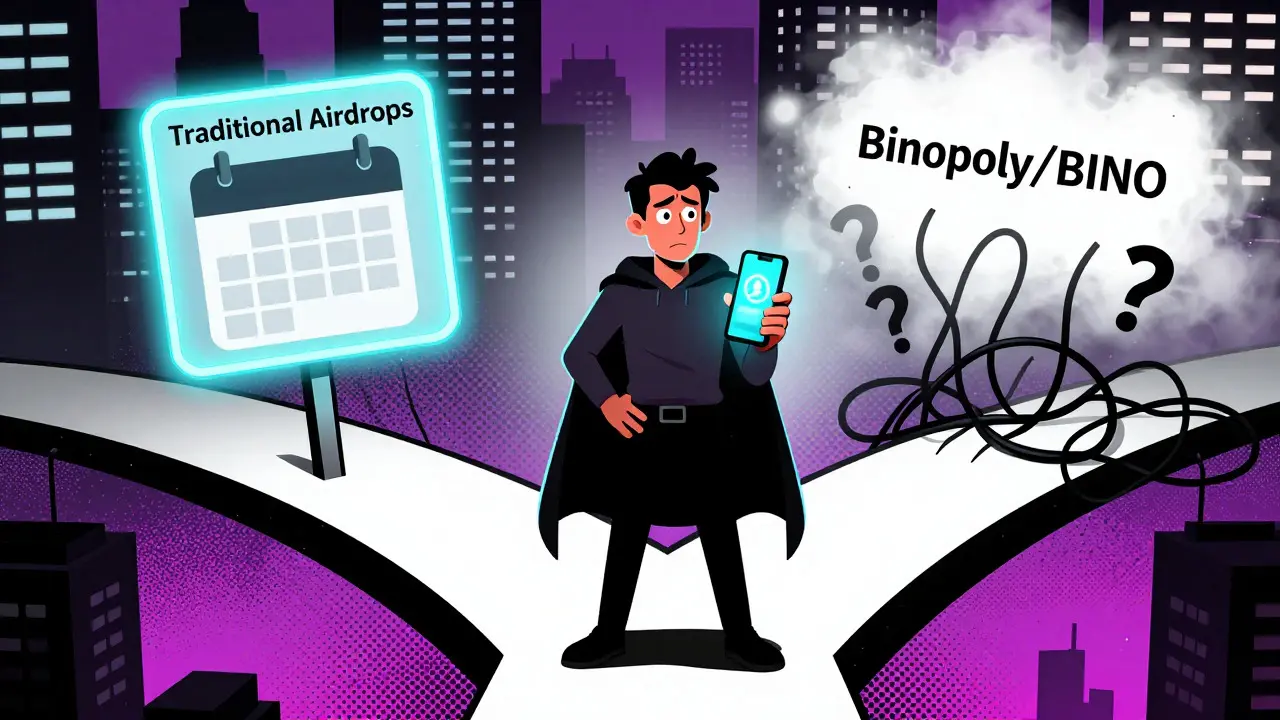
There is a lot of noise in the crypto space right now. You see headlines about massive payouts, and you want in. The BINO airdrop by Binopoly is one of those topics that keeps popping up in search results, but if you dig deeper, things get blurry. Is it real? When does it happen? And more importantly, how do you actually get your hands on these tokens without getting scammed?
The short answer is that Binopoly (BINO) isn't running a traditional, widely publicized airdrop with clear snapshot dates and fixed rewards like some major Layer 1 projects have done. Instead, the distribution seems to be tied to exchange-specific promotions, primarily on platforms like Bitget. This means the "how-to" changes depending on where you look. Let’s break down exactly what we know, what we don’t, and how you can position yourself to catch any free tokens that drop.
Understanding the Binopoly (BINO) Token
Before chasing an airdrop, you need to know what you are chasing. Binopoly is a cryptocurrency project associated with the ticker symbol BINO. It operates in a crowded market where ticker symbols can sometimes cause confusion. For instance, there is another project called BinoFi that also uses the BINO ticker. BinoFi has been in presale phases with hybrid exchange models, while Binopoly appears to have a different structure.
This distinction matters because if you sign up for the wrong project, you might end up with tokens that have no liquidity or value. The contract address often cited for Binopoly starts with 0xa2df...05eb592, but always verify this on official channels. Currently, market data for BINO is sparse. Major aggregators show placeholder values or inactive price feeds, which suggests limited trading volume or technical issues with data reporting. This lack of transparent market data is a red flag you should keep in mind when evaluating any potential reward.
How the BINO Airdrop Actually Works
Unlike projects that announce a specific date and say "everyone who held X on Y date gets Z tokens," the Binopoly airdrop mechanism is fragmented. There is no single, centralized announcement from the Binopoly development team detailing a global distribution plan. Instead, the primary avenue for receiving free BINO tokens appears to be through Bitget is a cryptocurrency exchange platform that hosts various promotional challenges and airdrop events for its users.
Here is how you typically engage with this:
- Join Exchange Challenges: Bitget frequently runs "AirDrop" or "Challenge" sections where users complete tasks. These tasks might include depositing a certain amount of stablecoins, trading specific pairs, or referring friends.
- Conversion Mechanisms: Some promotions allow you to convert points or rewards directly into BINO tokens. This isn't a direct token drop; it's a reward conversion.
- No Fixed Snapshot: Because it’s promotion-based, there is no universal snapshot. If you miss the challenge window on Bitget, you likely miss that specific batch of rewards.
This model is common for smaller or mid-cap tokens trying to build liquidity and user base without spending millions on marketing. It shifts the burden of discovery onto the user. You have to actively participate to get paid, rather than just holding bags and hoping for luck.
Eligibility Criteria and Requirements
Since there is no one-size-fits-all rulebook for the BINO airdrop, eligibility depends entirely on the specific promotion you enter. However, based on standard practices for exchange-hosted airdrops, here are the typical requirements you will face:
- Account Verification: Most exchanges require at least KYC Level 1 (Know Your Customer) to prevent Sybil attacks (where one person creates multiple accounts). Ensure your identity is verified before starting any challenge.
- Trading Volume: Many challenges require you to trade a minimum volume over a set period. For example, you might need to trade $100 worth of assets within 7 days.
- Holding Requirements: Some promotions ask you to hold a specific asset (like USDT or BNB) in your spot wallet during the snapshot period.
- Geographic Restrictions: Depending on local regulations, users from certain countries (like the US or parts of Europe) might be excluded from specific promotions.
Always read the Terms and Conditions of the specific Bitget challenge. If it says "subject to change," assume they can change the rules. Look for details on "snapshot time" and "distribution method." If those aren't listed, proceed with caution.
Risks and Red Flags to Watch For
Crypto airdrops are not free money; they are marketing expenses passed on to you in exchange for your attention and activity. With Binopoly, there are specific risks you need to manage.
Liquidity Risk: As mentioned, BINO shows low or inactive trading volume on many charts. If you receive an airdrop, can you sell it? Low liquidity means you might have to dump your tokens at a steep discount to find a buyer. Always check the order book depth before celebrating a reward.
Scam Alerts: Because official information is scarce, scammers fill the void. You will find fake websites claiming to be the "Official Binopoly Airdrop Portal." They will ask for your private key or seed phrase. Never give this out. Legitimate airdrops never ask for your seed phrase. They only need your public wallet address or your exchange account login.
Ticker Confusion: Remember the BinoFi vs. Binopoly issue. Double-check the contract address. Sending funds to the wrong contract or buying the wrong token can result in total loss. Use trusted block explorers like Etherscan or BscScan to verify addresses.
| Feature | Traditional Airdrop | Exchange Challenge (BINO Style) |
|---|---|---|
| Effort Required | Low (Hold tokens) | High (Complete tasks/trade) |
| Snapshot Date | Fixed and Public | Variable per promotion |
| Eligibility | Based on past activity | Based on current participation |
| Transparency | High (Whitepaper details) | Medium (Terms vary) |
Step-by-Step Guide to Participating
If you decide to pursue the BINO airdrop via Bitget or similar platforms, follow this structured approach to maximize your chances and minimize risk.
- Create and Verify Your Account: Sign up on Bitget. Complete the necessary KYC steps. This takes time, so don't wait until the last minute.
- Monitor the "Airdrop" Section: Navigate to the promotions or airdrop hub on the exchange. Filter for active campaigns involving BINO or general new token listings.
- Check Task Requirements: Read the fine print. Do you need to trade? Deposit? Invite friends? Calculate if the cost of trading fees exceeds the potential value of the reward.
- Execute Tasks Carefully: Perform the required actions. Keep screenshots of your completion status. Exchanges occasionally glitch, and proof helps in disputes.
- Wait for Distribution: Rewards are usually distributed a few days after the campaign ends. Check your email and notification center.
- Verify Receipt: Once received, check your balance. If you plan to hold, consider moving them to a self-custody wallet (if supported). If selling, do so slowly to avoid slippage.

Market Context and Future Outlook
The broader crypto landscape in 2026 is shifting. Users are becoming more sophisticated. We saw massive distributions from projects like Nillion Network and Initia earlier, setting high expectations. In comparison, Binopoly's quiet approach stands out as unusual.
Price predictions for BINO are currently unreliable, with many models showing zero value due to lack of data. This doesn't mean the token is worthless, but it does mean speculation is high-risk. Without a strong community presence or clear utility roadmap, the long-term viability of BINO is uncertain.
If you are participating solely for the airdrop, treat it as a speculative gamble with low stakes. Don't invest significant capital hoping for a multiplier return unless you have done deep due diligence on the Binopoly team and their technology. The absence of BINO from major "upcoming airdrop" lists on sites like CoinGecko suggests it may not have the backing or visibility of top-tier projects.
Alternatives to Consider
If the ambiguity around Binopoly makes you uncomfortable, there are other avenues for earning free crypto. Many established projects use point systems or loyalty programs that are more transparent.
- Layer 2 Testnets: Projects building on Ethereum or Solana often reward early testers with tokens later. These require technical effort but have higher potential upside.
- Staking Rewards: Staking established assets like ETH or SOL provides predictable, albeit smaller, returns without the hype cycle.
- Learn-and-Earn Programs: Platforms like Coinbase or Binance often offer small amounts of crypto for watching educational videos. It’s safe and easy.
Diversifying your airdrop strategy reduces reliance on obscure tokens like BINO. Focus on projects with active GitHub repositories, regular developer updates, and clear communication channels.
Is the BINO airdrop legit?
The BINO token exists and is traded on exchanges like Bitget. However, the "airdrop" is not a single global event but rather a series of promotional challenges hosted by exchanges. While the token is real, the value and availability depend on specific campaign terms. Always verify contract addresses to avoid scams.
When is the BINO airdrop snapshot?
There is no single public snapshot date for a global BINO airdrop. Snapshots are determined by individual exchange promotions (e.g., on Bitget). You must check the specific end date of the challenge you are participating in to know when the snapshot occurs.
How much BINO will I receive?
The amount varies significantly based on the promotion. Some challenges offer fixed amounts, while others distribute rewards proportionally based on trading volume or points earned. Check the specific terms of the Bitget challenge for estimated ranges.
Can I claim BINO on Binance?
BINO is not listed on the Binance centralized exchange. To acquire or claim BINO, you would likely need to use decentralized exchanges (DEX) via Web3 wallets or platforms like Bitget that support the token. Check Binance's Web3 Wallet section for DEX access.
What is the difference between Binopoly and BinoFi?
Both projects use the ticker BINO, which causes confusion. Binopoly is associated with the contract starting 0xa2df... and is found on exchanges like Bitget. BinoFi is a separate project that has undergone presales with different technological features (like MPC wallets). Always verify the contract address to ensure you are interacting with the correct project.