
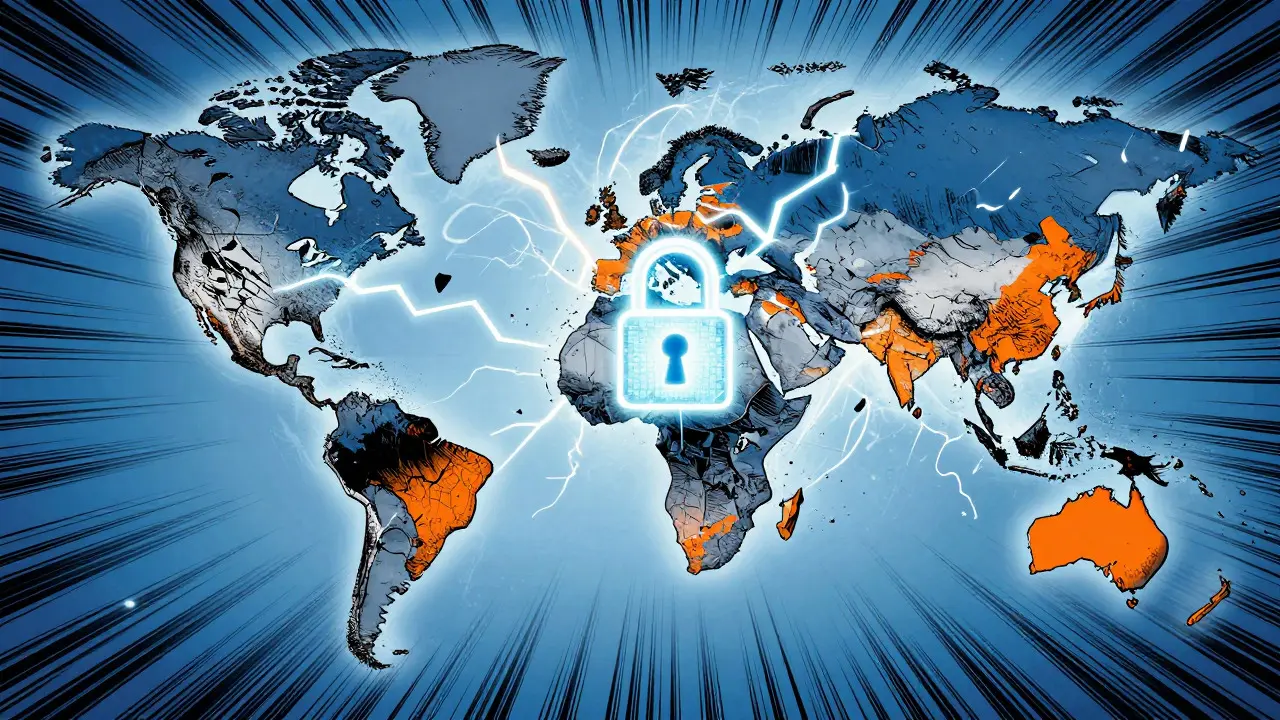
Trying to trade on Binance is the world's largest cryptocurrency exchange by trading volume, offering spot, futures, and staking services across multiple jurisdictions can feel like navigating a minefield if you live in the wrong place. You might think your country is fine, only to find out that while you can buy Bitcoin, you can't trade Futures, or worse, that your account gets frozen because of a recent regulatory update. As of August 2026, the landscape has shifted significantly since the implementation of the EU's Markets in Crypto-Assets (MiCA) regulation and stricter Anti-Money Laundering (AML) rules globally.
This guide breaks down exactly where you can and cannot use Binance, distinguishing between total bans, partial restrictions, and fully operational markets. We will look at the specific reasons for these changes, how they affect your wallet, and what alternatives exist if you are stuck in a restricted zone.
Key Takeaways
- Total Bans: Six countries face complete operational bans due to international sanctions (Cuba, Iran, Syria, North Korea, Crimea, and non-government-controlled Ukraine areas).
- National Crypto Bans: Twelve countries have banned all digital assets, effectively blocking Binance access regardless of the exchange's status (e.g., China, Bangladesh, Bolivia).
- Partial Restrictions: Over 50 countries, including the US, UK, Canada, and most of the EU, have limited access to specific products like Futures or local currency deposits.
- Geolocation Issues: Users near borders often face false-positive blocks due to IP and GPS triangulation systems.
- Compliance Costs: Binance has invested over $1.2 billion in compliance since 2023, leading to the creation of regional entities but also tighter user verification requirements.
The Three Categories of Restriction
It is not a simple yes-or-no list. To understand your access, you need to know which category your country falls into. These categories define what features are available to you.
Category 1: Complete Operational Bans
These are jurisdictions where Binance does not operate at all, primarily due to United Nations or US OFAC sanctions. If you live here, you technically should not be using the platform, though many still try via VPNs at their own risk.
- Cuba: Banned since Binance's inception in 2017.
- Iran: Added in 2018 following OFAC sanctions.
- Syria: Restricted in 2018.
- North Korea (DPRK): Restricted in 2018.
- Crimea: Region of Ukraine under sanctions since 2014.
- Non-Government-Controlled Ukraine Areas: Added in 2022.
Category 2: Total Digital Asset Bans
In these countries, the government has banned cryptocurrencies entirely. This means no exchange, including Binance, can legally operate. Using them usually requires bypassing state firewalls or banking blocks.
- China: Comprehensive ban on trading and mining since September 2021. Note that Hong Kong and Taiwan operate under separate frameworks.
- Bangladesh: Restricted under the Digital Security Act 2018.
- Bolivia: Banned by Central Bank Circular 001-2014.
- Algeria: Finance Law 18-04 enacted in 2018.
- Egypt: Central Bank ruling in 2020.
- Iraq: Central Bank warning issued in 2022.
- Kuwait: Central Bank Circular 7/2022.
- Morocco: Foreign Exchange Regulations from 2017.
- Nepal: Nepal Rastra Bank directive in 2017.
- Tunisia: Ban enforced in 2018.
- Afghanistan: Ban enforced by Taliban decree in 2022.
- North Macedonia: Ban implemented in 2023.
Category 3: Partial Restrictions and Market Exits
This is the most complex group. Here, Binance may have exited the market entirely or limited specific products. Your ability to trade depends heavily on which feature you want to use.
| Country/Region | Status | Spot Trading | Futures Trading | Local Currency Deposits | Key Reason |
|---|---|---|---|---|---|
| United States | Exited Main Platform | Available via Binance.US | Limited/Unavailable on US entity | USD Only (Binance.US) | SEC Settlement July 2024; State-level restrictions |
| United Kingdom | Active with Limits | Yes | No (FCA Permission Revoked) | GBP Yes | FCA revoked permissions Feb 2023 |
| European Union (EU) | Active with Limits | Yes | No (MiCA Regulation) | EUR Yes | MiCA derivatives ban effective Dec 2024 |
| Canada | Exited Main Platform | Limited/No CAD Support | No | CAD Withdrawals Stopped Feb 2024 | OSC Fine CAD$6M March 2024 |
| Nigeria | Suspended | No Naira Transactions | No | No NGN | SEC declared illegality Sept 2023; Exec detentions |
| Australia | Active with Limits | Yes | Suspended July 2024 | AUD Yes | ASIC Requirements |
| Japan | Licensed | Yes | Limited | JPY Yes | Strict registration laws since 2018 |
Notice the pattern? The biggest shift happened in Europe and North America. For years, traders loved Binance for its low fees and deep liquidity. But when MiCA is the first comprehensive regulatory framework in the European Union for crypto-assets, requiring strict licensing and consumer protection measures came into full effect in December 2024, it killed off derivatives trading for most EU residents. If you are in Germany, France, or Italy, you can still buy Bitcoin on Binance, but you likely cannot open a leveraged position on Ethereum. That is a massive change for active traders.

Why Are So Many Countries Restricted?
It is not just about governments hating crypto. There are three main drivers pushing exchanges like Binance to pull back or limit services.
1. The Rise of MiCA and Derivatives Bans
Dr. Ross Buckley, a leading expert in financial regulation, noted that MiCA created the biggest regulatory divergence in history. The rule is simple: if you want to sell crypto derivatives (futures, options) in the EU, you need a specific license. Binance didn't get one in time for most member states. So, they cut the service. This affects 27 EU countries plus Norway, Iceland, and Liechtenstein. It’s a huge blow to volume, but it keeps the door open for spot trading.
2. AML/CFT Compliance Pressures
The Financial Action Task Force (FATF) has been aggressive about tracking money flows. In 2024, 23 jurisdictions were greylisted for poor AML controls. This directly hit Binance in places like Jordan and Morocco. To avoid being shut down completely, Binance tightened Know Your Customer (KYC) rules. In high-risk areas like Turkey and Vietnam, you now need video KYC, which adds days to your activation process. In lower-risk countries, it takes less than a day. This friction pushes some users away, but it protects the exchange from fines.
3. Local Regulatory Rivalry
Some countries prefer their own home-grown exchanges. In the US, the SEC’s $4.3 billion settlement in July 2024 forced Binance to split operations. Now, US users must use Binance.US, which is a separate entity with fewer coins and higher fees. Similarly, in Canada, the Ontario Securities Commission fined Binance $6 million in CAD in 2024, leading to the exit of the main platform and the loss of easy CAD deposits. Users there now have to bridge funds through other networks, which is slower and more expensive.
Navigating Geolocation and Verification Traps
Even if your country isn’t officially banned, you might face technical hurdles. Binance uses a geolocation system that checks your GPS, IP address, and SIM card data. This creates problems for people living near borders.
Take Germany as an example. Users in Aachen, right next to the Dutch border, report a 37% chance of getting falsely flagged because their IP pings might bounce off servers in the Netherlands, which had different rules before its full exit. Canadian users in Vancouver experience similar issues when connecting to US-based cellular networks, leading to higher verification failure rates.
If you are in a "gray zone" country like Serbia or Bosnia, you might find yourself in limbo. Reddit threads show thousands of reports from users in these areas having their accounts frozen without clear warning. The Terms of Service allow Binance to terminate accounts at its sole discretion, which leaves users anxious. If you are in one of these regions, keep your documents updated and be prepared for sudden changes. Many users in partially restricted countries now maintain secondary accounts on other exchanges just in case.
What Does This Mean for Your Strategy?
Your location dictates your tools. Here is how to adapt based on where you are:
- If you are in the EU: Focus on spot trading. Don’t count on leverage. Use stablecoins for cross-border transfers if needed, but remember that MiCA also applies to stablecoin issuers.
- If you are in the US: Check if your state allows crypto trading. New York, for instance, has very strict rules. Use Binance.US for basic needs, but consider moving to Coinbase or Kraken if you need deeper liquidity or specific tokens that aren’t listed on the US entity.
- If you are in Asia (Excluding Japan/HK): Be cautious with KYC. Video verification is common. Ensure your ID matches your name exactly. Delays are normal.
- If you are in Africa or Latin America: Watch out for local currency volatility. Nigeria’s ban on Naira transactions was a shock. Always keep a portion of your portfolio in USD or EUR stablecoins to hedge against local banking disruptions.
The market is fragmenting. What used to be a global, unified market is breaking into regional silos. Binance’s market share dropped from 63% in 2021 to 41% in 2025 partly because of this. Competitors like Coinbase and Kraken are gaining ground in the US and EU respectively. For you, the trader, this means you might need to juggle two or three different exchanges to get the best prices and features. It’s less convenient, but it’s the new reality.
Frequently Asked Questions
Can I use a VPN to trade on Binance in a restricted country?
Technically, yes, but it’s risky. Binance’s terms allow them to close accounts at their discretion. If they detect mismatched IP and SIM data, they may freeze your funds. Many users in gray zones report account closures after using VPNs. It works for some, but don’t assume it’s safe long-term.
Why did Binance leave Canada?
Binance exited the Canadian market in October 2023 after facing regulatory pressure. In March 2024, the Ontario Securities Commission fined them CAD$6 million for failing to verify high-risk transactions. Since then, direct CAD deposits and withdrawals have been suspended, making the platform much less useful for local users.
Is Binance Futures available in the UK?
No. The Financial Conduct Authority (FCA) revoked Binance’s permission to offer derivatives in February 2023. You can still do spot trading and hold assets, but leveraged positions are no longer available for UK residents on the main Binance platform.
What is the difference between Binance and Binance.US?
They are separate legal entities. Binance.US serves American customers and has fewer listed coins, higher fees, and different fee structures. The main Binance platform is for international users. Assets are not easily transferable between the two without going through a third-party wallet or another exchange.
Will Binance come back to restricted countries?
Possibly, but slowly. Binance has announced "Regulatory Sandboxes" in nine emerging markets in late 2025. This suggests they are trying to re-enter some areas with lighter compliance burdens. However, full restoration of services in places like Nigeria or Canada depends on resolving specific legal disputes, which could take years.