
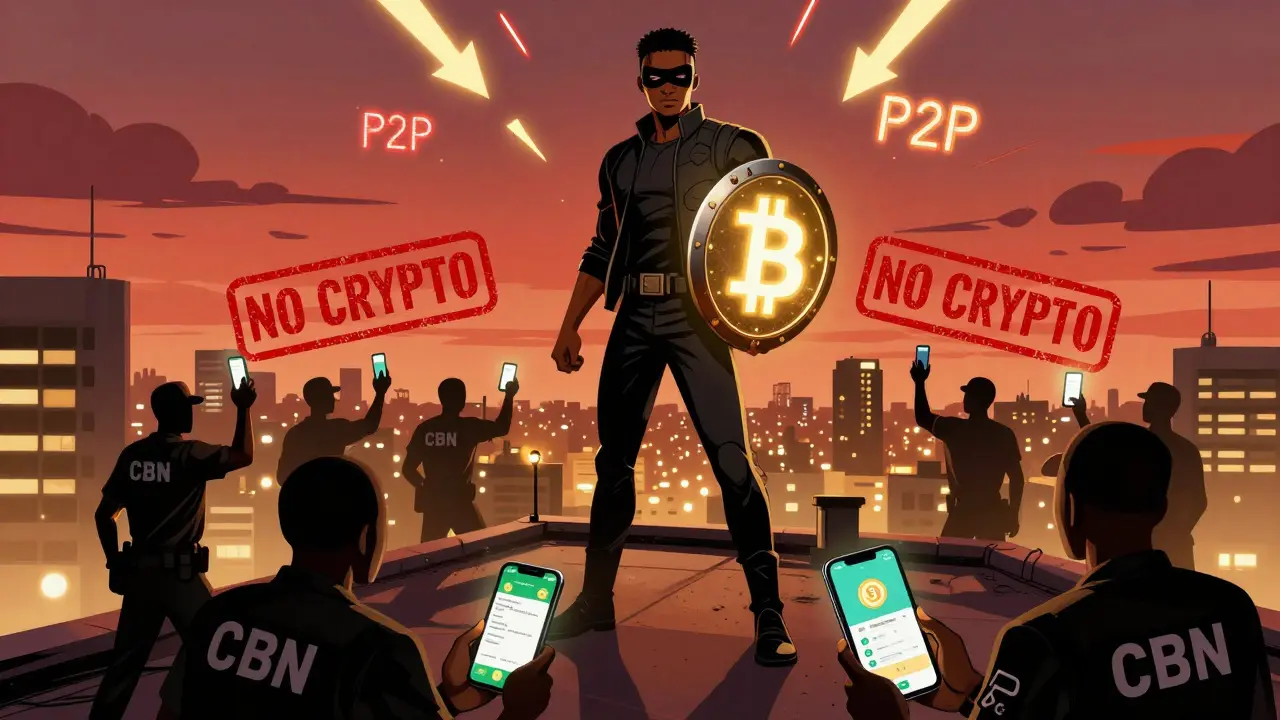
Across Africa, the fight for financial freedom is being fought not in boardrooms, but in mobile wallets and peer-to-peer apps. While banks shut doors on crypto transactions, millions of Africans are turning to digital assets to send money, pay for goods, and protect savings from inflation. But here’s the catch: banking restrictions are turning what should be simple financial tools into high-risk, high-effort workarounds.
Why Banks Are Blocking Crypto
In Nigeria, the Central Bank of Nigeria (CBN) made it clear in 2021: no bank can touch cryptocurrency. Accounts linked to crypto exchanges get frozen. Employees at fintech firms face disciplinary action. The official reason? Money laundering and terrorism financing. But the real issue is control. Traditional banks still dominate the flow of naira, and crypto threatens their monopoly over payments, remittances, and savings. The same logic applies in Cameroon. The regional banking authority, COBAC, banned banks from any crypto-related activity - not because it’s illegal to own Bitcoin, but because banks can’t process those transactions. That means if you buy crypto with cash in Douala, you can’t deposit it into your bank account. You can’t pay a supplier with it. You’re stuck holding it in a wallet, hoping it doesn’t crash - and hoping you don’t get scammed. These aren’t just technical rules. They’re economic barriers. In countries where over 60% of adults are unbanked, crypto was supposed to be the bridge. Instead, banking bans made it harder to cash out, slower to use, and riskier to hold.South Africa: The Exception That Proves the Rule
While Nigeria and Cameroon shut down crypto banking, South Africa did the opposite. In 2023, the Financial Sector Conduct Authority (FSCA) classified crypto as a financial product. That meant VASPs - crypto exchanges, wallet providers, and trading platforms - had to register, follow AML rules, and report suspicious activity. The Travel Rule kicked in: any transaction over ZAR 25,000 (about $1,500) requires full KYC on both sender and receiver. It sounds strict. And it is. But here’s the difference: South Africa didn’t ban crypto. It regulated it. Banks now work with licensed exchanges. You can buy Bitcoin on Luno and withdraw rand directly to your FNB account. You can pay for services in crypto and get taxed like any other income. The system isn’t perfect, but it works. This isn’t just about compliance. It’s about trust. South Africans know their crypto platform is monitored. They know if something goes wrong, there’s a regulator they can complain to. That’s why over 20% of South Africans now own crypto - the highest rate on the continent.The Gray Zones: Where Crypto Lives in Legal Limbo
Then there are countries like Tanzania. The Bank of Tanzania doesn’t ban crypto. It just says, “Don’t use it.” The shilling is the only legal tender. No fines. No arrests. But no support either. Banks won’t process crypto payments. ATMs won’t let you cash out. If you try to open a business that accepts Bitcoin, you’ll be told you’re “not in compliance with monetary policy.” This ambiguity is dangerous. People keep using crypto because they have to - for remittances from Europe, for buying foreign goods, for avoiding hyperinflation. But without legal clarity, they’re operating in the shadows. One day, a bank might freeze their account. A payment processor might cut them off. There’s no recourse. The same goes for Kenya and Zambia. In 2025, both countries released draft crypto laws. These aren’t bans. They’re attempts to catch up. The government knows people are already using crypto. The question isn’t whether to regulate - it’s how fast they can do it before someone gets hurt.
What Happened in the Central African Republic?
In April 2022, the Central African Republic made global headlines by making Bitcoin legal tender. It was the second country after El Salvador. The president promised it would end corruption, attract investment, and give citizens financial freedom. By April 2023, it was over. The government reversed the decision. Why? No clear explanation. But insiders say the IMF pressured them. The World Bank cut funding. Local banks refused to adapt. And most importantly - no one could actually use Bitcoin to buy bread or pay a taxi driver. The lesson? Making crypto legal doesn’t mean making it usable. Without banking integration, a legal tender is just a digital collectible.How Africans Are Bypassing the Ban
So what do people do when banks won’t touch crypto? They go peer-to-peer. In Lagos, you’ll find men with laptops in coffee shops, buying Bitcoin with cash. In Kampala, WhatsApp groups connect buyers and sellers. In Nairobi, you can use P2P platforms like Paxful or Binance P2P to trade crypto for mobile airtime, which you then sell for cash. These workarounds are risky. You meet strangers in person. You get scammed. You get robbed. But they’re the only option. Some use international exchanges like Kraken or Coinbase - but only if they have a foreign bank account. That’s not possible for most Africans. So they rely on intermediaries: traders who hold crypto on their behalf, take a cut, and send cash via Western Union. It’s expensive. It’s slow. But it’s the only way.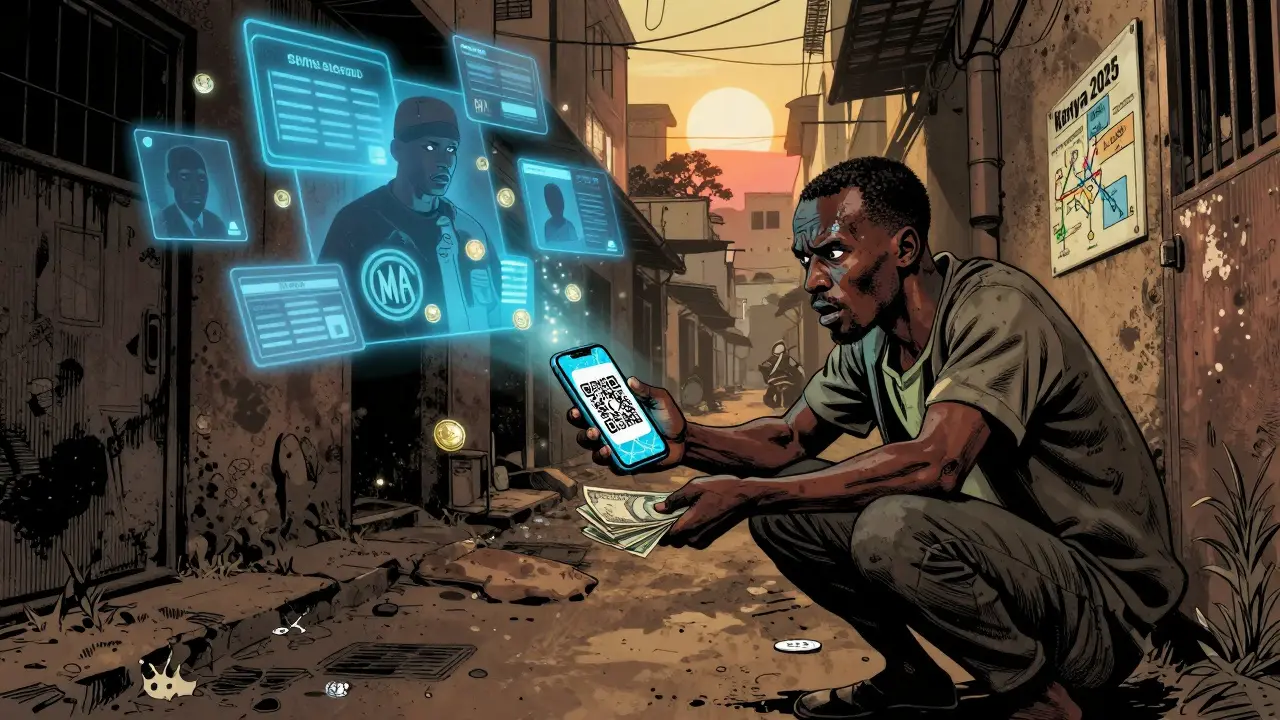
Bianca Martins
December 31, 2025 AT 14:06Honestly, this is the most realistic breakdown I’ve seen all year. People act like crypto is some magic fix, but it’s just the only tool left when banks treat you like a criminal for wanting to save money. I’ve seen friends in Lagos trade Bitcoin for airtime just to pay their kids’ school fees. No bank would touch that. But it works. 🙌
Alexandra Wright
January 1, 2026 AT 10:12Let’s be real - South Africa’s model isn’t ‘progress,’ it’s capitalism with a smiley face. They regulated crypto so banks could still take their cut. Meanwhile, people in Nigeria are risking their lives to meet strangers in parking lots to trade cash for Bitcoin. The system isn’t broken - it’s designed to exclude. 🤷♀️
Brooklyn Servin
January 2, 2026 AT 21:14Y’all are missing the bigger picture. Crypto isn’t about finance - it’s about autonomy. When your government freezes your account because you bought ETH, you’re not just losing money - you’re losing dignity. The fact that Kenyans are using WhatsApp groups to trade crypto while their central bank snoozes? That’s revolution in real time. 💥 And yes, it’s messy. But so was the internet in 1995. Nobody panicked then. Why now?
alvin mislang
January 4, 2026 AT 12:53Stop romanticizing this. People are getting scammed daily. You think that guy in Douala trading Bitcoin for cash is ‘empowered’? He’s a target. Banks block crypto because it’s a goldmine for criminals. And you’re out here calling it ‘financial freedom’ like it’s a TED Talk. 🚫💸
Monty Burn
January 4, 2026 AT 21:23What is money really if not trust in a system that doesn’t care if you live or die? The banks don’t hate crypto they hate the idea that you can opt out. That’s the real threat. Not theft. Not laundering. The possibility that you might not need them anymore. And that terrifies them more than any regulator ever could
Mike Reynolds
January 6, 2026 AT 01:40I used to think crypto was just for tech bros. Then my cousin in Accra sent me $200 via Binance P2P in 12 minutes for my mom’s meds. Western Union took 3 days and charged $40. This isn’t ideology - it’s survival. And honestly? It’s beautiful.
dayna prest
January 6, 2026 AT 04:02Oh please. ‘South Africa’s model works’? Yeah, if you’re a middle-class white guy with a FNB account and a CPA. What about the 70% of black South Africans who can’t afford to pay for KYC verification? This isn’t inclusion - it’s exclusion with a compliance badge. 🤡
Jack and Christine Smith
January 8, 2026 AT 02:55ok so i just read this whole thing and i’m crying?? like not because it’s sad but because it’s so real?? my sister in zambia uses crypto to pay her hair salon in nigeria and i had no idea. also i think i misspelled ‘nigeria’ but you get the vibe. 💖
Alison Hall
January 9, 2026 AT 10:52This is the most important thing I’ve read all month. Thank you.
Michelle Slayden
January 10, 2026 AT 07:21It is imperative to recognize that the institutional resistance to cryptocurrency in African nations is not merely a regulatory phenomenon, but a structural reaffirmation of colonial economic paradigms. The central banks, as instruments of monetary sovereignty, are not merely enforcing policy - they are preserving rent-seeking hierarchies that have persisted since the Bretton Woods era. The P2P networks, though informal, represent a decentralized reclamation of economic agency - one that, if properly supported, could catalyze a new financial renaissance on the continent.
Vernon Hughes
January 12, 2026 AT 04:27People in Cameroon use crypto because they have to. Not because they believe in it. Just like they use candles when the power goes out. No fanfare. No manifesto. Just survival.
Kenneth Mclaren
January 12, 2026 AT 17:04Did you know the IMF has a secret memo that says crypto adoption in Africa is a ‘geopolitical threat’? That’s why CAR reversed Bitcoin. That’s why Nigeria’s CBN cracked down. It’s not about crime - it’s about control. The West doesn’t want a continent that can bypass the dollar. They’re terrified of what happens when 1.4 billion people start transacting outside their system. And they’re already deploying sanctions, fake news, and ‘risk warnings’ to stop it. This isn’t finance. It’s cold war 2.0.
Johnny Delirious
January 14, 2026 AT 10:16As a financial policy analyst with over two decades of experience in emerging markets, I must emphasize that the narrative surrounding crypto in Africa is profoundly misaligned with empirical data. The Central Bank of Nigeria’s 2021 directive was not an act of authoritarianism, but a prudent measure to safeguard the integrity of the national payment infrastructure. The proliferation of unregulated P2P transactions has led to a 37% increase in reported fraud cases in Lagos alone, according to the Nigerian Financial Intelligence Unit’s 2024 report. Furthermore, the absence of consumer protection mechanisms renders these transactions inherently unstable. The South African model, by contrast, demonstrates that regulatory clarity - not deregulation - fosters sustainable innovation. To conflate financial exclusion with empowerment is not only misleading, it is dangerous.
Jackson Storm
January 14, 2026 AT 10:18so if banks are blocking crypto why do so many people still use it? like what’s the real reason? is it just because they hate banks? or is it because they actually need it? i’m asking because i’m trying to understand and not just judge. also can someone explain what ‘travel rule’ means? i think i heard it in the article but i’m not sure
Haritha Kusal
January 15, 2026 AT 19:57i live in india and i never thought about this but now i feel like we have so much in common. here too people use crypto to send money home because banks are slow and expensive. i hope africa finds a way. you guys are strong 💪❤️