
Cryptocurrency in Namibia sits in a strange middle ground. It is not illegal to own Bitcoin or Ethereum, but it is also not legal tender. If you try to pay for groceries with crypto, the shop owner might accept it, but the government doesn't have to honor it as money. This confusion stems from years of shifting rules by the Bank of Namibia, which has moved from outright skepticism to a structured, albeit cautious, regulatory framework. For businesses and investors looking at the Namibian market in 2026, understanding these restrictions is critical. The landscape is defined by strict licensing requirements, a ban on foreign exchanges, and a heavy emphasis on anti-money laundering compliance.
The Shift from Ban to Regulation
To understand today's rules, you need to look back at where things started. In 2018, the Bank of Namibia (BON) took a hardline stance. They declared that they did not recognize cryptocurrencies as commodities and did not support their trading on any financial market. Essentially, if you were running a crypto business then, you were operating in the shadows. The central bank viewed digital assets as risky and unregulated.
This changed slowly. By 2022, BON acknowledged reality: merchants could accept Bitcoin if they wanted to, even though it wasn't legal currency. But the real turning point came in June 2023. The National Assembly passed the Virtual Assets Act (Act No. 10 of 2023). This law created the first comprehensive structure for digital assets in the country. Alongside this, the Payment System Management Act (Act No. 14 of 2023) was enacted to regulate payment providers. Together, these laws form the backbone of Namibia's current crypto policy.
How VASP Licensing Works
If you want to run a crypto exchange, wallet service, or ATM in Namibia, you are classified as a Virtual Asset Service Provider (VASP). You cannot just open shop and start trading. You must go through NAMFISA (the Namibia Financial Institutions Supervisory Authority). The process is rigorous and follows a two-step model designed to weed out non-compliant operators.
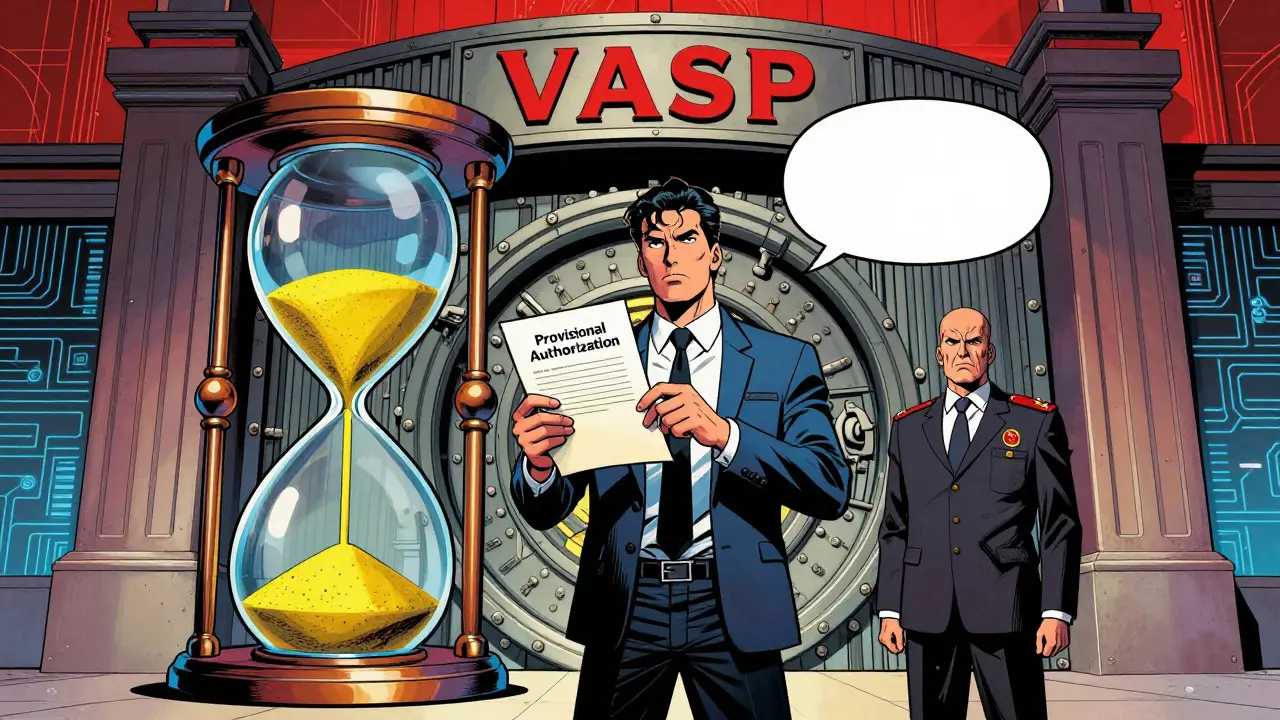
Step 1: Provisional Authorization You apply for provisional authorization. If granted, you get six months. During this time, there is a major restriction: you cannot conduct any business with the public. You cannot trade, you cannot onboard customers, and you cannot process transactions. Instead, you use this period to set up your infrastructure, hire staff, and install necessary software. Think of it as a regulatory sandbox where you prepare without interacting with users.
Step 2: Full Operational License After six months, BON inspects your setup. If you meet all conditions, you get final approval. Only then can you engage with individuals or entities in Namibia. If you fail the inspection, you don't get to trade. This slow rollout explains why only a handful of companies have full licenses so far. In January 2025, BON granted provisional status to four entities, including Mindex Virtual Asset Exchange and Landifa Bitcoin Trade CC. However, by mid-2025, some had requested extensions, highlighting how difficult it is to meet these high standards quickly.
Key Restrictions and Compliance Rules
Namibia’s approach is protective rather than permissive. The regulations include several specific restrictions that differentiate it from more open markets like Nigeria or South Africa.
- Ban on Foreign Exchanges: You cannot use crypto-exchanges that are not based in Namibia. This means global giants like Binance or Coinbase cannot legally operate directly within the country unless they establish a local entity and get licensed. All platforms serving Namibians must be locally registered.
- The Travel Rule: For any transaction exceeding NAD 20,000 (approximately USD 1,000), VASPs must collect and share detailed information about the sender and receiver. This includes names, ID numbers, and account details. This rule aligns Namibia with international anti-money laundering (AML) standards.
- No Legal Tender Status: Despite merchant discretion, virtual assets remain without legal tender status. Businesses are not forced to accept them, and debts cannot be settled in crypto unless both parties agree voluntarily.
- ICO Warnings: The Bank of Namibia remains highly skeptical of Initial Coin Offerings (ICOs). Official position papers state that ICOs are prone to fraud and manipulation. While not explicitly banned in all contexts, the Bank does not advocate for public engagement in ICOs, signaling high risk for retail investors.
Comparison with Regional Policies
How does Namibia stack up against its neighbors? The African continent is seeing rapid crypto adoption, but regulatory approaches vary wildly. Understanding these differences helps explain Namibia's cautious path.
| Country | Regulatory Stance | Key Feature | Status for Businesses |
|---|---|---|---|
| Namibia | Moderate/Cautious | Virtual Assets Act 2023; Local-only exchanges | Licensed VASPs allowed after 6-month probation |
| South Africa | Advanced | VASP registration since 2022 | More mature framework; faster onboarding |
| Nigeria | Restrictive | Banks banned from facilitating crypto (2021) | Harder for traditional banks to interact with crypto |
| Botswana | Prohibitive | Complete ban on crypto trading | Illegal to operate |
| Ghana | Emerging | Comprehensive regulations planned for late 2025 | In transition phase |
Namibia’s unique selling point is its structured pathway. Unlike Botswana’s total ban or Kenya’s largely unregulated wild west, Namibia offers a clear, albeit slow, route to legitimacy. However, the six-month operational freeze during provisional licensing is a significant hurdle. Competitors in jurisdictions like Mauritius can start operating under supervision immediately, giving them a revenue advantage. For Namibian startups, this delay burns cash before they can earn a single cent.
The Future: rCBDC and Blockchain Hesitation
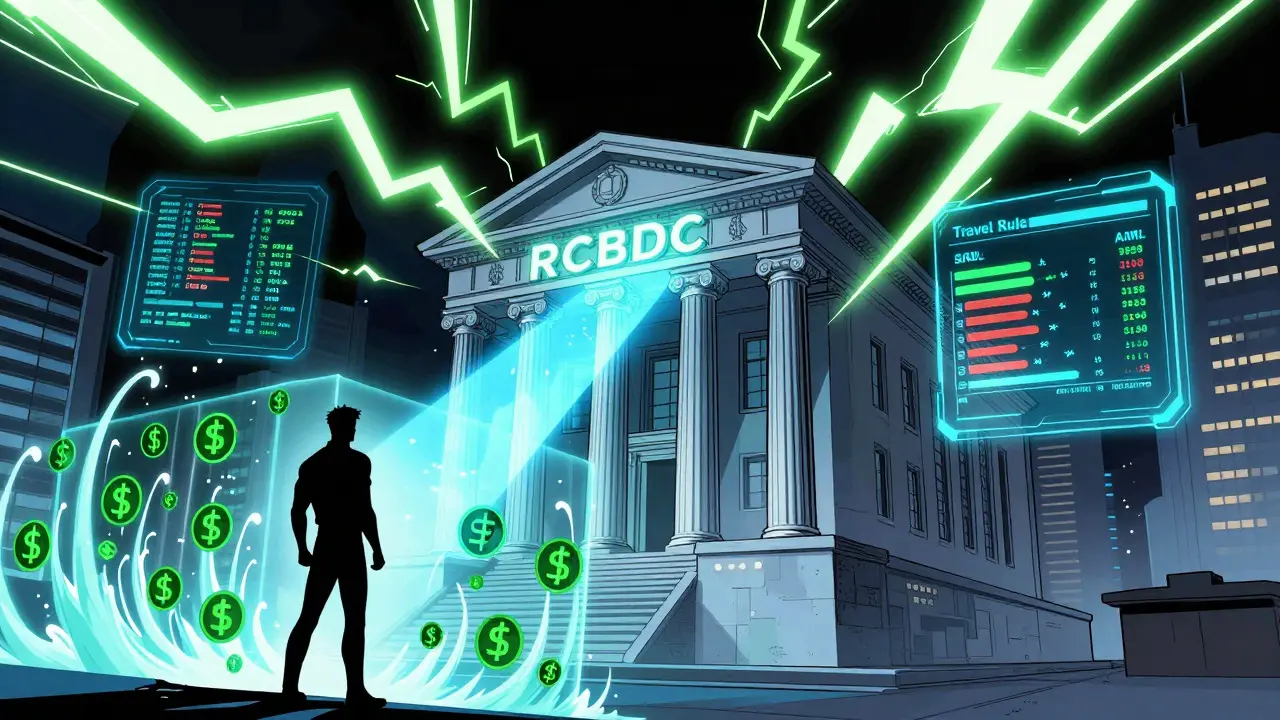
While regulating private crypto, the Bank of Namibia is also looking inward. In 2025, BON began exploring a Retail Central Bank Digital Currency (rCBDC). The goals are clear: improve financial inclusion, modernize the payment system, and streamline cross-border payments. The IMF praised BON’s "cohesive and coordinated approach" to this exploration.
However, there is tension. The U.S. Department of State’s 2025 Investment Climate Statement noted BON’s "reluctance to allow the implementation of blockchain technologies." This suggests that while the Bank wants to control the narrative through an rCBDC, it may still view decentralized blockchain infrastructure with suspicion. This hesitation could slow down innovation in areas like smart contracts or decentralized finance (DeFi), even as VASP licensing progresses.
For now, Namibia is building a hybrid ecosystem. Private cryptocurrencies will exist under strict supervision, while the state develops its own digital currency. Investors should expect continued refinement of the provisional licensing model, with potential expansion of permitted services as compliance systems mature. But don’t expect a free-for-all. The Bank of Namibia prioritizes stability over speed.
Practical Tips for Navigating the Market
If you are planning to enter the Namibian crypto market, keep these points in mind:
- Plan for Cash Flow Gaps: Budget for at least six months of operational costs without revenue during the provisional authorization phase.
- Local Presence is Mandatory: Do not rely on offshore exchanges. Establish a local entity and apply for VASP licensing through NAMFISA early.
- Invest in Compliance Tech: The Travel Rule requires robust KYC (Know Your Customer) and AML systems. Ensure your software can automatically capture and store sender/receiver data for transactions over NAD 20,000.
- Avoid ICOs for Now: Given the Bank’s negative stance, raising capital through ICOs may face regulatory headwinds or reputational damage. Consider traditional funding routes instead.
Is cryptocurrency legal in Namibia?
Yes, owning and using cryptocurrency is legal, but it is not legal tender. Merchants can choose to accept it, but they are not required to. Trading and providing services require a license from NAMFISA under the Virtual Assets Act of 2023.
Can I use Binance or Coinbase in Namibia?
Technically, no. Namibian law bans crypto-exchanges that are not based in Namibia. To operate legally, an exchange must register locally and obtain a VASP license. Using foreign platforms exists in a gray area and carries regulatory risk.
What is the Travel Rule in Namibia?
The Travel Rule requires Virtual Asset Service Providers (VASPs) to collect and share sender and receiver information (names, IDs, accounts) for transactions exceeding NAD 20,000. This is part of Namibia’s anti-money laundering efforts.
How long does it take to get a crypto license in Namibia?
It takes at least six months. You first receive provisional authorization, during which you cannot do business. After setting up infrastructure and passing inspections, you may receive full operational licensing. Extensions are possible if you are not ready.
Does the Bank of Namibia support Initial Coin Offerings (ICOs)?
No. The Bank of Namibia has stated that ICOs are prone to fraud and manipulation. While not strictly banned in all cases, the Bank does not advocate for public participation in ICOs, viewing them as high-risk investments.
Is Namibia developing its own digital currency?
Yes. The Bank of Namibia is exploring a Retail Central Bank Digital Currency (rCBDC) to improve financial inclusion and cross-border payments. This is separate from private cryptocurrencies like Bitcoin.