
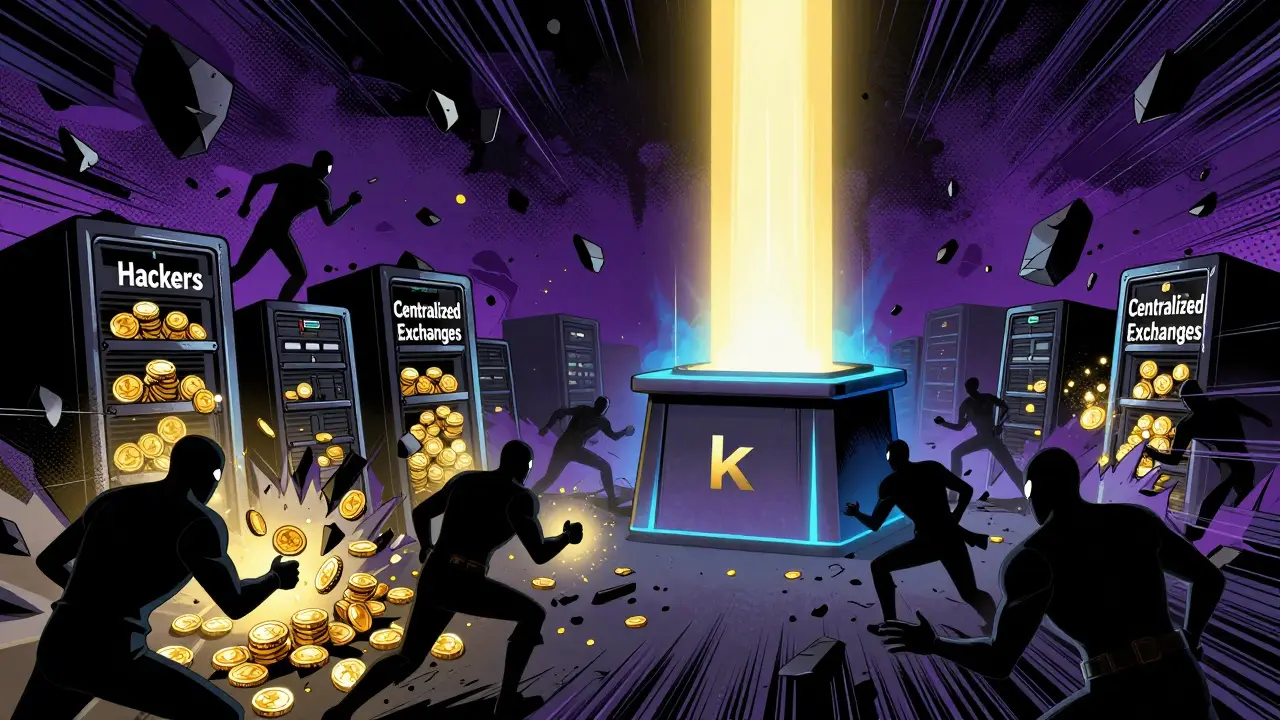
Remember the chaos of early 2025? Between Bybit’s $1.5 billion Ethereum heist and the wave of hot wallet exploits that drained billions from centralized exchanges, trust in traditional crypto platforms hit rock bottom. If you’re looking for a way to buy Bitcoin without handing your funds over to a company that might get hacked next week, Athena Bitcoin Global is a specialized cryptocurrency service provider operating primarily as a Bitcoin kiosk network rather than a traditional centralized exchange, founded to facilitate direct cash-to-bitcoin transactions without holding customer assets. Ticker symbol ABIT on NASDAQ, this company isn’t trying to be Coinbase or Binance. It’s building a physical bridge between fiat cash and Bitcoin, specifically designed for people who want zero custody risk.
What Exactly Is Athena Bitcoin Global?
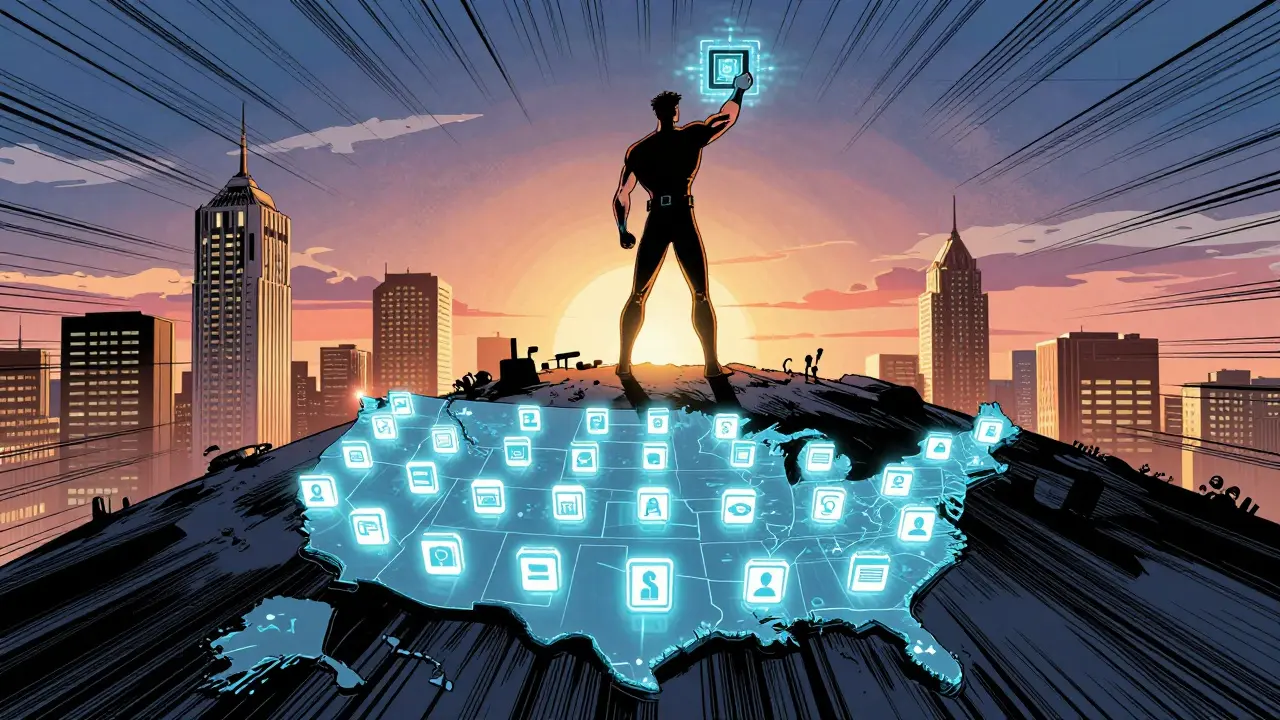
Let’s clear up a common misconception right away: ABIT is not a trading platform. You won’t find advanced charting tools, staking rewards, or decentralized finance (DeFi) integrations here. Instead, it operates a network of physical kiosks and a companion mobile app focused on one thing-getting new users into Bitcoin quickly and securely. As of late 2025, their network spans 34 U.S. states, Puerto Rico, and three Latin American countries, serving roughly 1 million customers since launch.
The core philosophy is simple: never hold user funds. In an industry where custodial breaches are becoming alarmingly frequent, this non-custodial model is ABIT’s biggest selling point. When you use an ABIT kiosk, you insert cash, verify your identity through their five-step attestation process, and the Bitcoin goes directly to your personal wallet. The money changes hands instantly, but ABIT never touches the cryptocurrency itself. CEO Matias Goldenhörn emphasized this during Customer Appreciation Month 2025, noting that user control begins the moment the purchase is confirmed.
How Does the Buying Process Work?
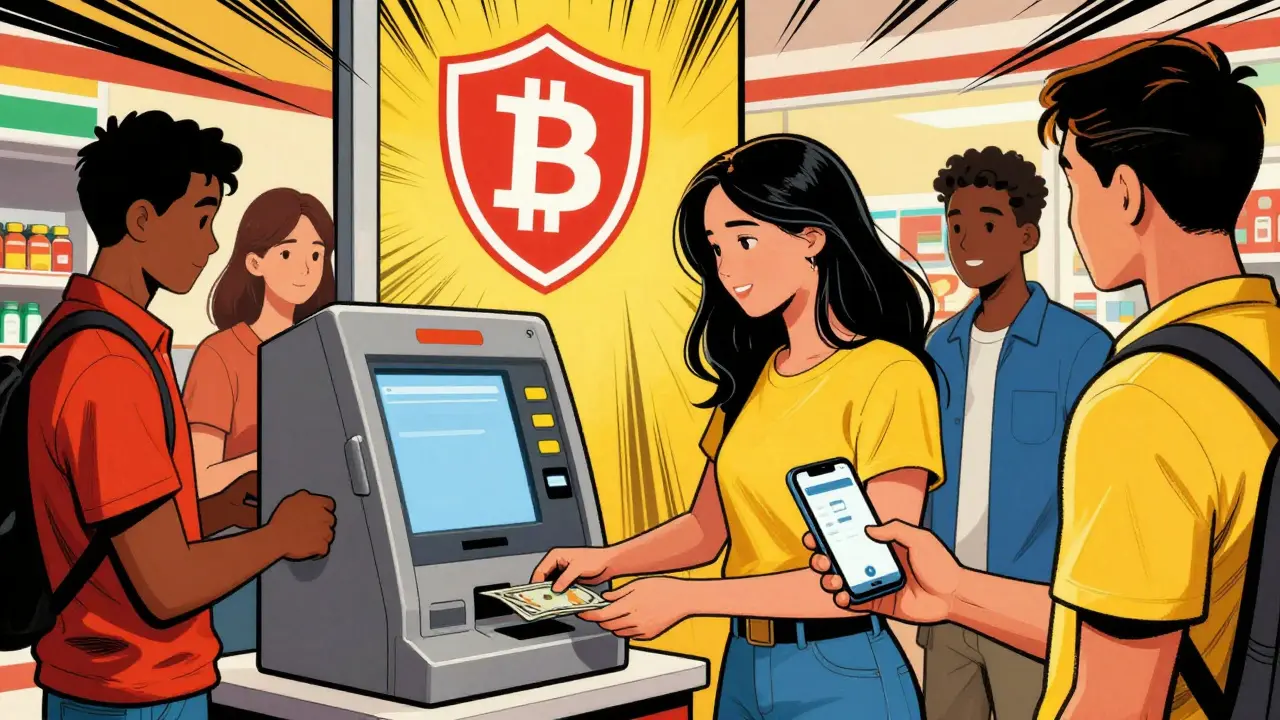
If you’ve ever used a standard ATM, you’ll feel at home with ABIT’s interface. The learning curve is intentionally shallow. According to internal metrics, first-time users complete transactions in 5 to 10 minutes, compared to the 20-30 minutes often required for KYC verification on centralized exchanges. Here’s what the process looks like in practice:
- Locate a Kiosk: Use the ABIT mobile app’s locator feature, which shows real-time availability across 2,841 operational locations. These are typically found in convenience stores, check-cashing businesses, and grocery stores in high-foot-traffic areas.
- Insert Cash or Card: While originally cash-only, ABIT added credit and debit card capabilities in October 2025 for both online and in-app purchases, expanding access beyond physical visits.
- Complete Attestation: This is the critical security step. Users must verify their phone number, email, physical address, government ID (for transactions over $900 per CFTC rules), and transaction purpose.
- Receive Bitcoin: Once verified, the Bitcoin is sent directly to the wallet address you provided. No intermediate storage, no company-controlled vaults.
This streamlined approach makes it ideal for small, infrequent purchases. However, if you’re planning to move large sums, take note: ABIT enforces a daily transaction limit of 1 BTC per customer, updated in August 2025.
Fees and Pricing: What Will It Cost You?
Convenience usually comes with a premium, and ABIT is no exception. Their pricing structure reflects the cost of maintaining physical infrastructure and compliance licenses. For cash transactions at kiosks, fees average between 8% and 10%. This is significantly higher than the sub-1% fees you might see on major exchanges like Kraken or Coinbase Pro, but it’s comparable to other kiosk networks like CoinFlip or Bitcoin Depot.
| Provider | Average Fee | Daily Limit | Custody Model |
|---|---|---|---|
| Athena Bitcoin (ABIT) | 8-10% (Cash), 7-9% (Card) | 1 BTC | Non-Custodial |
| Coinbase | 0.5-1.5% | Varies by verification | Custodial |
| CoinFlip | 10-15% | $10,000+ | Non-Custodial |
| Bitcoin Depot | 12-14% | Varies | Non-Custodial |
The new card-based service introduced in Q3 2025 offers slightly lower fees, ranging from 7% to 9%, making it a more attractive option for those who prefer digital payments. Keep in mind that while these fees seem steep, they include the cost of instant liquidity and regulatory compliance, which centralized exchanges often externalize.
Security Analysis: Safer Than Centralized Exchanges?
Security is the elephant in the room for any crypto discussion in 2026. With the Lazarus Group alone stealing $1.82 billion from exchanges in 2025, the fear of custodial failure is real. Dr. Elena Rodriguez, a cybersecurity professor at MIT, noted in a September 2025 interview that ABIT’s avoidance of fund custody eliminates the single largest attack vector in the industry. Since they don’t hold your coins, hackers can’t steal them from ABIT’s servers.
However, shifting risk doesn’t eliminate it-it just moves it elsewhere. Industry analyst Michael Grunstein of Delphi Digital pointed out that ABIT’s model shifts vulnerability to physical locations and user education. To combat this, ABIT employs velocity controls to detect unusual patterns that might indicate coercion or theft. They also partner with Chainalysis Hexagate for real-time monitoring, a tool previously adopted by leading exchanges for proactive defense against hacks.
Critics, however, aren’t entirely convinced. Security researcher Alex Mikhelson highlighted in a September 2025 article that the lack of cold storage creates different vulnerabilities, particularly around transaction confirmation times. During periods of high volatility, users have reported price slippage exceeding 5% due to front-running risks before transactions confirm on the blockchain. While rare, these incidents remind us that speed and security often trade off against each other.
User Experience and Market Position
Who actually uses ABIT? The demographics tell a compelling story. Unlike centralized exchanges that cater heavily to tech-savvy investors, ABIT’s primary user base consists of individuals aged 25-44, with 47% having household incomes under $50,000. Notably, 63% of ABIT users report having no traditional banking relationship, compared to only 14% on centralized exchanges. This positions ABIT as a vital onboarding tool for the unbanked population.
In terms of market share, ABIT commands approximately 18% of the U.S. Bitcoin kiosk market, trailing CoinFlip’s 32% but ahead of Bitcoin Depot’s 24%. User feedback on Trustpilot shows a 3.8/5 rating from over 1,200 reviews. Positive comments frequently praise the ease of use for first-time buyers and clear multilingual instructions. Negative reviews, however, often cite high fees and occasional technical glitches, such as network congestion causing delays in Bitcoin delivery.
Future Outlook and Expansion Plans
Looking ahead, ABIT is aggressively expanding. Their Q3 earnings call revealed plans to grow their kiosk count from 2,841 to 4,500 by the end of 2026, covering all 50 U.S. states. They are also developing biometric verification for their attestation process, targeting implementation by Q1 2026 to further reduce fraud risks. A recent partnership with the Retail ATM Industry Association (RAGA) signals their intent to leverage existing ATM regulatory frameworks, potentially smoothing the path for future mainstream adoption.
As insurance premiums for crypto custodians rise following the 2025 attacks, the economic viability of non-custodial models like ABIT’s continues to strengthen. For users prioritizing safety and simplicity over low fees and advanced features, ABIT offers a compelling alternative in an increasingly fragmented crypto landscape.
Is Athena Bitcoin Global (ABIT) safe to use?
Yes, ABIT is considered safe because it operates on a non-custodial model, meaning they never hold your cryptocurrency. Your Bitcoin is sent directly to your personal wallet upon purchase, eliminating the risk of exchange hacks. However, users should remain vigilant about physical security at kiosks and ensure they send funds to the correct wallet address.
What are the fees for buying Bitcoin on ABIT?
Transaction fees for cash purchases at ABIT kiosks average between 8% and 10%. The newer credit and debit card services offer slightly lower fees, ranging from 7% to 9%. These fees are higher than centralized exchanges but reflect the cost of instant liquidity and physical infrastructure.
Do I need a bank account to use ABIT?
No, you do not need a bank account. ABIT is designed for accessibility, allowing users to buy Bitcoin with cash at physical kiosks. Approximately 63% of ABIT users do not have a traditional banking relationship, making it a popular choice for the unbanked population.
Where can I find an ABIT kiosk?
You can locate ABIT kiosks using their mobile app’s 'kiosk locator' feature, which shows real-time availability across 2,841 locations. Kiosks are typically found in convenience stores, check-cashing businesses, and grocery stores in 34 U.S. states, Puerto Rico, and three Latin American countries.
Is there a daily limit on ABIT transactions?
Yes, ABIT enforces a daily transaction limit of 1 BTC per customer. This limit was updated in August 2025 to enhance security and manage risk. For larger investments, users may need to spread purchases over multiple days or consider other platforms.