
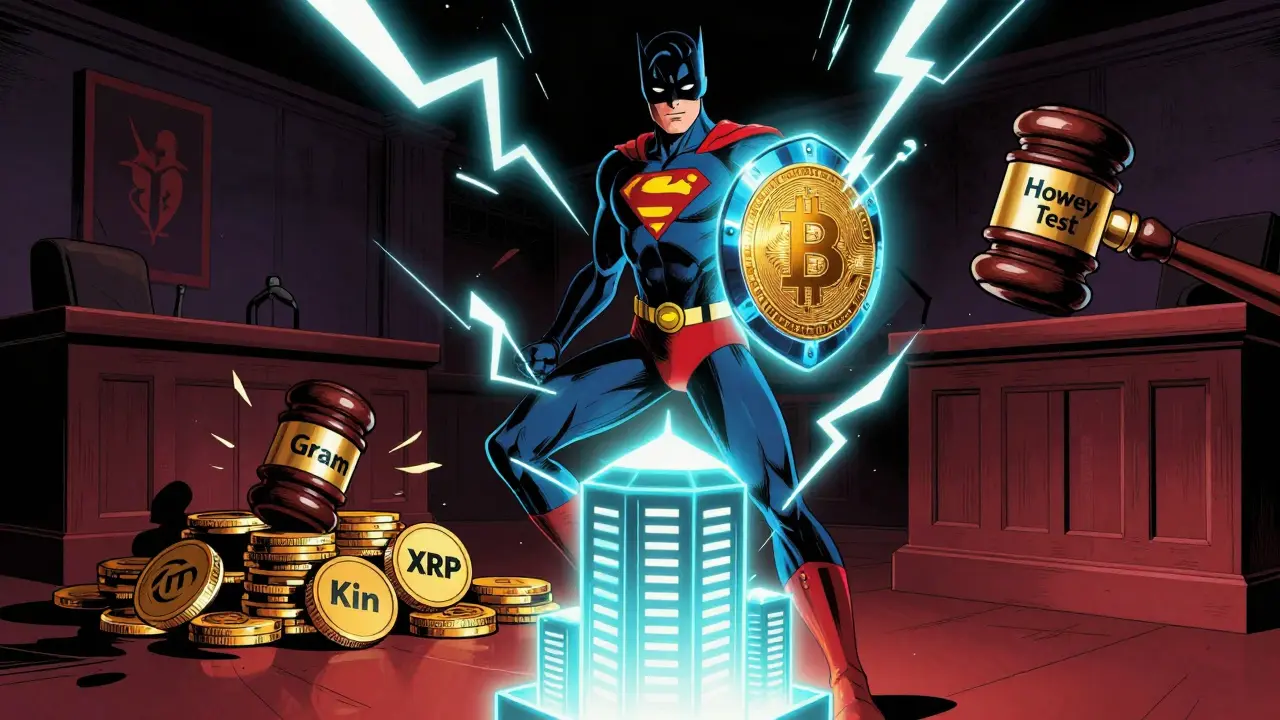
Is your Bitcoin a security? What about Ethereum? Or that new token you bought because a Discord group said it would 10x? The answer isn’t simple - and it’s not just about the coin itself. It’s about how it was sold, who’s behind it, and whether people bought it expecting to make money from someone else’s work. That’s the core of the debate.
It’s Not About the Tech - It’s About the Deal
The U.S. Securities and Exchange Commission (SEC) doesn’t look at whether a cryptocurrency is built on blockchain or uses smart contracts. Instead, they use a 78-year-old legal test called the Howey Test. It comes from a 1946 Supreme Court case involving orange groves. Back then, people bought plots of land and hired a company to grow and sell the oranges. The Court ruled: if you pay money into a venture expecting profits from someone else’s efforts, that’s a security - even if it’s not a stock certificate. Today, that same logic applies to crypto. If you bought a token because the team promised you returns, or because they marketed it as an investment opportunity, the SEC says you bought a security. It doesn’t matter if the token lets you vote in a DAO or access a game. If the main reason people bought it was to profit, it’s likely a security.Bitcoin and Ethereum: The Exceptions
Bitcoin is almost never called a security. Why? Because when it launched in 2009, there was no team selling it to raise money. No whitepaper promising returns. No centralized company managing it. People mined it themselves. Over time, it became decentralized, open, and used mostly as a store of value or payment tool. The SEC has never sued anyone for selling Bitcoin as a security - and in 2022, both the SEC and CFTC agreed Bitcoin is a commodity. Ethereum is trickier. It raised money in 2014 through an initial sale. But by 2020, its network was running on thousands of independent validators. No single team controlled it. In 2023, the SEC settled its case against Coinbase, acknowledging Ethereum’s network was sufficiently decentralized. That same year, the SEC approved the first spot Ethereum ETFs - a quiet signal that, for now, they treat it like a commodity, not a security.What Makes a Token a Security?
Tokens that look like investments are the ones getting targeted. Here’s what the SEC looks for:- Was there a public sale to raise money for development?
- Did the team promise price increases, staking rewards, or profit sharing?
- Is the network still controlled by a small group of developers?
- Do token holders rely on that team to improve the project?
- Telegram’s Gram tokens - Raised $1.7 billion in 2018 with promises of future utility and value growth. SEC shut it down. Telegram returned all funds.
- Kik’s Kin tokens - Marketed as a digital currency but tied to Kik’s growth. SEC fined them $5 million in 2020.
- Ripple’s XRP - The SEC sued in 2020, claiming XRP sales were unregistered securities. In 2023, a judge ruled XRP sales to the public weren’t securities - but sales to institutions were. The final ruling is still pending.
The Regulatory Split: SEC vs. CFTC
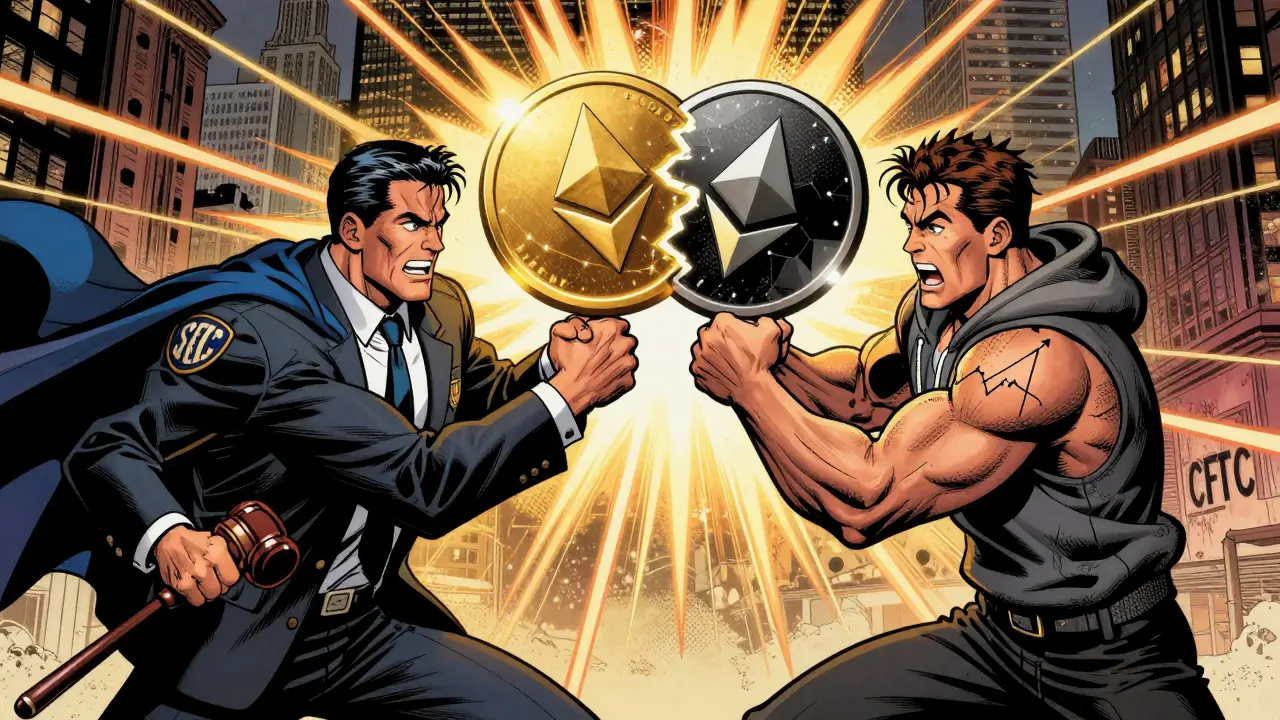
There’s a battle going on behind the scenes. The SEC says: if it’s an investment, it’s a security. The CFTC says: if it’s traded like a commodity, it’s a commodity. Bitcoin and Ethereum fall under the CFTC’s umbrella. But for everything else? The SEC steps in. This split creates chaos. A platform might be compliant with the CFTC but still get hit by the SEC. In 2023, the CFTC fined Binance $1.8 billion for offering unregistered derivatives. The same year, the SEC fined Kraken $30 million for offering staking services - which they called unregistered securities. Both platforms did the same thing: let users earn rewards. One regulator said it was fine. The other said it was illegal.Stablecoins: The Gray Zone
Stablecoins like USDC and USDT are pegged to the U.S. dollar. They’re not meant to go up in value - so they’re not investments. The SEC doesn’t treat them as securities. But they’re still heavily regulated. In January 2026, Paxos paid $150 million to settle charges that its BUSD stablecoin was sold as an unregistered security. Why? Because the way it was marketed - with promises of yield and liquidity - made it look like an investment product, not just a payment tool. Algorithmic stablecoins like TerraUSD are a different story. They collapsed in 2022, wiping out $40 billion. No backing. No safety net. The SEC now treats them as high-risk financial instruments. The Clarity for Payment Stablecoins Act passed in 2023 to create federal rules - but it only applies to dollar-backed ones. Algorithmic ones? Still a legal gray area.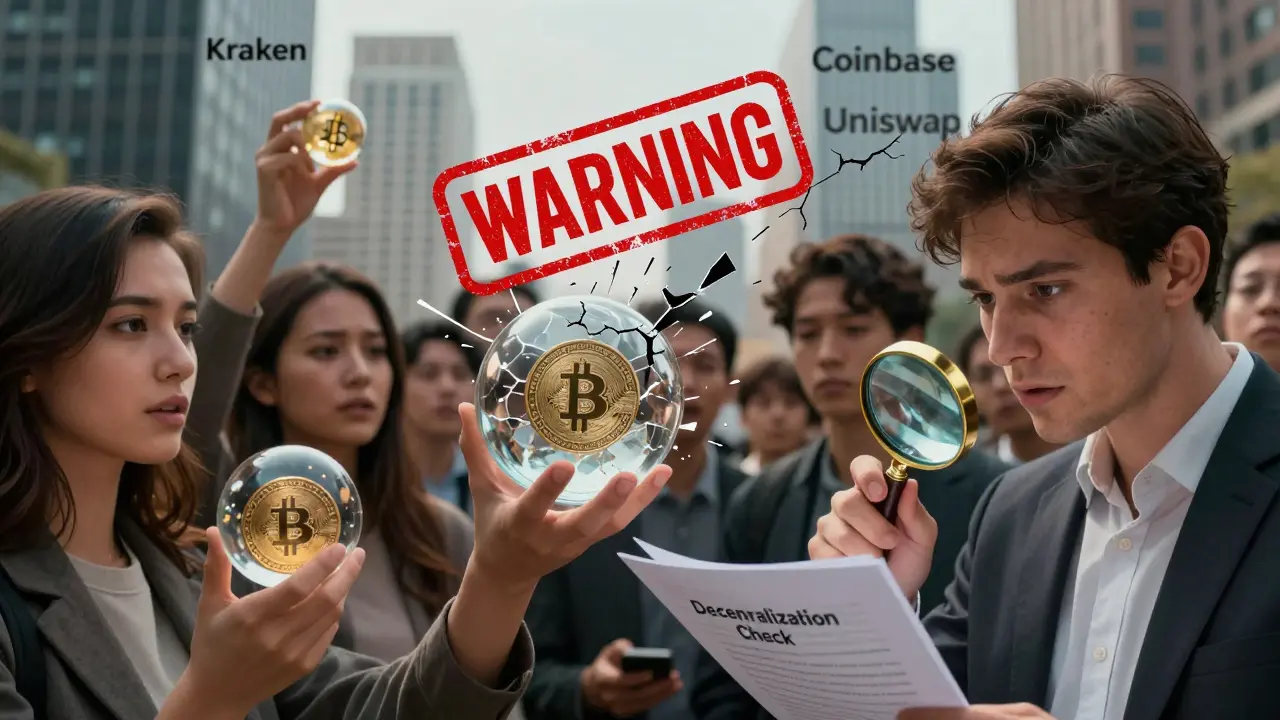
What’s Happening Right Now? (January 2026)
The rules are changing fast. In June 2023, the SEC approved Bitcoin ETFs. In March 2025, they approved Ethereum ETFs. That doesn’t mean they changed their mind about securities - it means they’re adapting. ETFs are regulated investment vehicles. By approving them, the SEC is acknowledging that Bitcoin and Ethereum are now treated as commodities by the market. Meanwhile, enforcement is still fierce. In January 2026, Uniswap Labs was fined $3.5 million for operating an unregistered swap facility. Coinbase paid $600 million in 2024. Genesis paid $50 million in 2023. These aren’t small fines. They’re warnings. A 2026 survey of 250 crypto startups found that 68% delayed or canceled token launches because of SEC uncertainty. Thirty-one U.S.-based projects moved overseas. Singapore and Switzerland are now the top places for new token launches - not because they’re more lenient, but because their rules are clear.What Should You Do?
If you’re an investor:- Ask: Was this token sold as an investment?
- Check if the team is still centralizing control.
- Look for SEC enforcement actions against similar projects.
- If you’re holding a token that got hit by the SEC - expect liquidity to dry up. Many projects freeze withdrawals after a lawsuit.
- Don’t promise returns. Don’t use words like “investment,” “profit,” or “yield” in your marketing.
- Make sure your network is truly decentralized before launch.
- Consult a lawyer who understands both crypto and securities law - not just a blockchain developer.
- Consider launching outside the U.S. if you’re unsure.
Is There a Solution Coming?
Yes - maybe. The Responsible Financial Innovation Act (S.3425), introduced in January 2026, proposes a clear split:- Commodities: Bitcoin, Ethereum, and other decentralized networks.
- Securities: Tokens sold with investment expectations and centralized control.
- Payment tokens: Stablecoins and utility tokens used for transactions.
At the end of the day, the question isn’t “Are cryptocurrencies securities?” It’s “Was this specific token sold like one?” If the answer is yes - then the law treats it like one. No matter how fancy the blockchain is.
Is Bitcoin a security?
No. Bitcoin is not considered a security by U.S. regulators. It was launched without a central team selling it for profit, and its network is fully decentralized. The SEC and CFTC both treat Bitcoin as a commodity. No SEC enforcement action has ever targeted Bitcoin itself.
Is Ethereum a security?
As of early 2026, Ethereum is treated as a commodity, not a security. While it raised funds in 2014, its network became decentralized over time. The SEC approved Ethereum ETFs in 2025, signaling it no longer views Ethereum as an investment contract. However, this status could change if centralization increases again.
What’s the Howey Test?
The Howey Test is a legal standard from a 1946 Supreme Court case. It says something is a security if: (1) you invest money, (2) in a common enterprise, (3) expecting profits, (4) primarily from the efforts of others. The SEC uses this to decide if a crypto token is a security - not based on its tech, but on how it was sold and whether buyers expected returns from someone else’s work.
Can a token stop being a security?
Yes. The SEC’s “decentralize-and-morph” theory says a token can start as a security during its fundraising phase but later become a commodity if the network becomes fully decentralized. Bitcoin and Ethereum are examples. Once no single team controls the network and users rely on the protocol - not a company - it may no longer be a security.
Why do some crypto projects get fined and others don’t?
It depends on how the token was marketed and whether the team still controls the network. Projects that promised returns, had centralized teams, or sold tokens before the network was live got hit. Projects like Bitcoin and Ethereum avoided fines because they didn’t make those promises. The SEC targets those who sold investments disguised as tech.
What happens if I hold a token the SEC says is a security?
You won’t be fined. But the platform you bought it on might shut down or freeze withdrawals. Exchanges like Coinbase and Kraken delist tokens after SEC actions. Liquidity dries up. Selling becomes hard or impossible. Some investors lose access to their funds entirely - as happened with the Bitconnect collapse and Kik’s Kin token.
Are stablecoins securities?
Fiat-backed stablecoins like USDC and USDT are not classified as securities - they’re treated as payment instruments. But if they’re marketed with yield or investment promises, the SEC can step in. Paxos paid $150 million in 2026 because BUSD was sold with features that made it look like an investment product, not just a dollar replacement.
Why does this matter for everyday users?
Because if a token you own gets classified as a security, you might not be able to trade it. Exchanges will delist it. Wallets may freeze it. You could lose access to your money. Regulatory actions don’t just hurt companies - they directly impact retail investors who didn’t know the risks.
Chris O'Carroll
January 17, 2026 AT 06:36Chidimma Okafor
January 18, 2026 AT 05:38ASHISH SINGH
January 20, 2026 AT 00:16Sarah Baker
January 21, 2026 AT 00:56Liza Tait-Bailey
January 21, 2026 AT 11:23Andre Suico
January 23, 2026 AT 08:31Bill Sloan
January 23, 2026 AT 17:25Vinod Dalavai
January 24, 2026 AT 15:51Callan Burdett
January 24, 2026 AT 21:46Nishakar Rath
January 24, 2026 AT 22:56Jason Zhang
January 26, 2026 AT 19:13Katherine Melgarejo
January 27, 2026 AT 22:19Patricia Chakeres
January 28, 2026 AT 06:26