
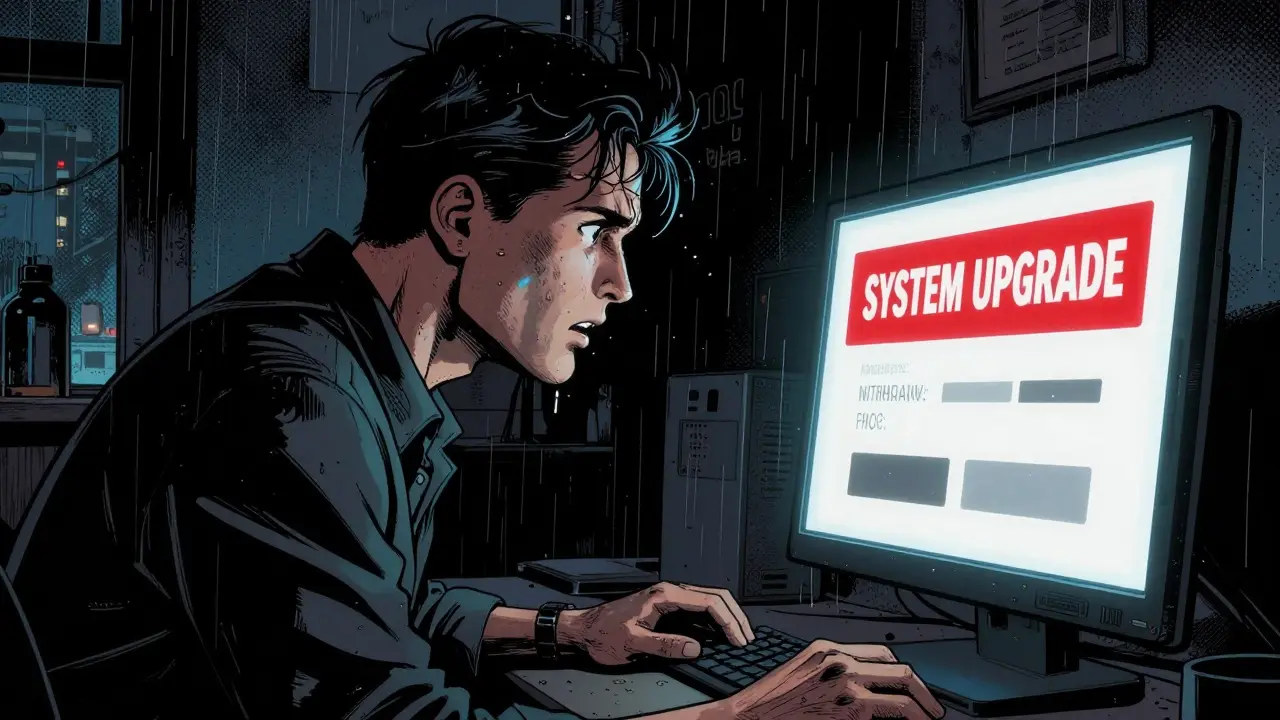
Imagine logging into your favorite crypto trading platform one morning, only to find a generic "system upgrade" message that never goes away. You try to withdraw your Bitcoin or Ethereum, but the buttons are grayed out. Support emails bounce back. The website eventually disappears entirely. This isn't a hypothetical nightmare scenario for many users of AOFEX, a cryptocurrency exchange that promised innovative options trading before vanishing in what experts now classify as a classic rug pull.
If you are searching for an AOFEX review in 2026, you likely have one of two goals: either you were a user trying to understand why your funds are gone, or you stumbled upon the name online and want to know if it is safe to use. The answer to the second question is definitive: do not use it. AOFEX is no longer operational. It ceased operations under suspicious circumstances in 2022, leaving thousands of users unable to access their assets. This article breaks down exactly what happened, why it went wrong, and how you can avoid similar traps with other exchanges.
The Rise and Fall of AOFEX
To understand the severity of the AOFEX collapse, we need to look at its trajectory. Launched in 2019, AOFEX positioned itself as a unique player in the crowded crypto market. Its headquarters were reportedly in London, United Kingdom, with additional offices in Singapore. The platform’s main selling point was being the first digital asset trading platform to offer Non-Standardized Option trading capabilities. For traders tired of simple spot buying and selling, this sounded like a sophisticated tool for hedging and speculation.
During its peak years between 2020 and 2021, AOFEX grew rapidly. Reports from Coinmarketcap showed a 24-hour trading volume of USD 270 million in June 2021, which skyrocketed to USD 1.2 billion by December 2021. The platform boasted over 370 trading pairs, including major coins like Bitcoin (BTC), Ethereum (ETH), Litecoin (LTC), and its native token, AQ. They offered high leverage up to 100x, mobile apps for iOS and Android, and even a fiat gateway for buying crypto with credit cards or bank transfers.
On paper, it looked legitimate. But beneath the surface, red flags were already waving. Unlike established giants such as Binance or Coinbase, AOFEX lacked transparent proof-of-reserves audits. It operated with limited regulatory oversight, despite claiming compliance. Wikibit noted that the exchange had exceeded its FinCEN license requirements, a significant legal violation in the United States. These issues hinted at structural weaknesses that would soon lead to total collapse.
The 2022 Disappearance: A Classic Rug Pull
The end came abruptly in 2022. Users reported that the exchange became inaccessible after an alleged "system upgrade." For ten days, nothing happened. Then, silence. The site never went live again. CaptainAltcoin, a respected voice in crypto journalism, investigated and concluded that AOFEX executed a rug pull-a fraudulent exit where developers or operators abscond with user funds.
What makes this particularly devastating is the timing. The crypto market was volatile in 2022, following the collapse of Terra Luna and FTX. Trust was already fragile. When AOFEX disappeared, it added another layer of fear to the industry. Users who held the native AQ token saw it become worthless overnight. Those with BTC or ETH balances found themselves locked out permanently. Customer support, previously advertised as 24/7 via phone and email, stopped responding entirely.
CoinCodex, a major crypto data aggregator, updated its listing to explicitly warn: "This exchange is no longer operational." They removed all trading pair data because there was none left to track. This isn't a temporary downtime; it's a permanent closure due to fraud. If you see any website currently claiming to be AOFEX, treat it as a phishing scam designed to steal your credentials or money.
Red Flags We Missed: Why AOFEX Failed
Looking back, several warning signs should have alerted experienced traders. Understanding these helps you vet future exchanges more effectively.
- Lack of Regulatory Transparency: While AOFEX claimed to be based in London and Singapore, it did not hold clear licenses from major financial authorities like the FCA (UK) or MAS (Singapore). Its FinCEN registration issue in the US was a major breach.
- No Proof of Reserves: Legitimate exchanges publish regular attestations showing they hold user funds 1:1. AOFEX never provided independent audits of its solvency.
- Aggressive Leverage Marketing: Offering 100x leverage attracts risky behavior. While not illegal, it often signals a platform prioritizing short-term volume over long-term stability.
- Sudden Volume Spikes: The jump from $270M to $1.2B daily volume in six months was impressive but unsustainable without massive institutional backing, which AOFEX did not disclose.
- Negative Community Sentiment: Forums like Reddit began discussing withdrawal delays and unresponsive support months before the final shutdown.
These factors combined created a house of cards. When market conditions shifted or internal liquidity dried up, the structure collapsed. The operators chose flight over transparency, leaving users holding the bag.
Comparison: AOFEX vs. Secure Alternatives
| Feature | AOFEX (Defunct) | Binance (Operational) | KuCoin (Operational) | Coinbase (Operational) |
|---|---|---|---|---|
| Status | Scam/Rug Pull (2022) | Active | Active | Active |
| Regulatory Compliance | Poor (FinCEN Violation) | Global Licenses | Varying by Region | Strong (US Public Co.) |
| Proof of Reserves | None | Regular Audits | Regular Audits | Quarterly Attestations |
| Trading Pairs | ~400 (Pre-collapse) | 700+ | 700+ | 200+ |
| User Fund Safety | Lost | High (SAFU Fund) | Medium-High | High (Insurance) |
| Native Token Risk | Total Loss (AQ) | BNB (Utility) | KCS (Utility) | N/A |
This table highlights the stark difference between a fraudulent operation and a compliant business. Binance, KuCoin, and Coinbase may have their own controversies, but they remain operational, provide transparency reports, and adhere to some level of regulatory framework. AOFEX offered none of these safeguards.
What Should You Do If You Were an AOFEX User?
If you lost money on AOFEX, I know the frustration is immense. Here are the realistic steps you can take, though recovery is unlikely.
- Document Everything: Gather all transaction records, deposit confirmations, wallet addresses, and screenshots of your account balance before the crash. Email correspondence with support is crucial evidence.
- Report to Authorities: File a report with your local financial crime unit. In the UK, contact Action Fraud. In the US, file a complaint with the FTC and SEC. Since AOFEX had ties to London and Singapore, reporting to those jurisdictions may also help consolidate cases.
- Join Victim Groups: Look for existing communities on Twitter, Telegram, or Reddit where other AOFEX victims share information. Collective action sometimes pressures law enforcement to prioritize cases.
- Accept the Loss: Hard as it is, most rug pulls result in zero recovery. The operators likely laundered funds through multiple chains. Treat this as a costly lesson in exchange vetting.
Do not fall for secondary scams. There are fake "recovery agents" who claim they can hack back your funds for a fee. These are always scams. No one can retrieve funds from a closed, fraudulent exchange except law enforcement.
How to Choose a Safe Crypto Exchange in 2026
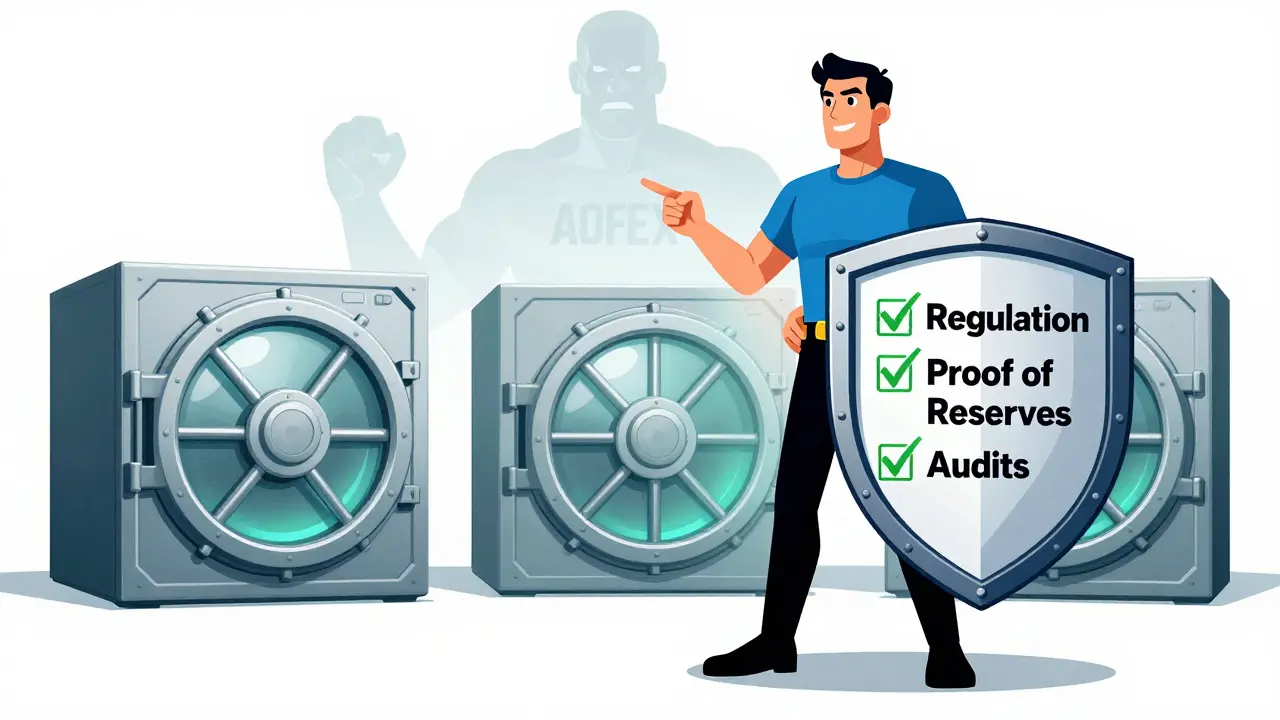
The AOFEX disaster underscores the importance of due diligence. With the rise of AI-driven trading bots and decentralized finance (DeFi), the landscape is more complex than ever. Here is a checklist to ensure your next exchange is legitimate.
- Check Regulatory Status: Does the exchange hold licenses in reputable jurisdictions? Avoid platforms that claim to be "global" but list no specific regulators.
- Verify Proof of Reserves: Look for recent Merkle Tree proofs or audits by firms like Armanino or Grant Thornton. If they don’t publish this monthly, walk away.
- Research History: How old is the exchange? Platforms operating since before 2020 have survived multiple bear markets. New launches carry higher risk.
- Read Independent Reviews: Don’t trust paid reviews on the exchange’s homepage. Check CoinMarketCap, CoinGecko, and independent YouTube analysts for unbiased opinions.
- Test Withdrawals: Before depositing large sums, make a small deposit and immediately withdraw it. If the process is slow or confusing, it’s a bad sign.
- Use Hardware Wallets: Never leave long-term holdings on any exchange. Use cold storage like Ledger or Trezor for assets you aren’t actively trading.
In 2026, the industry has matured. Regulations like MiCA in Europe and stricter SEC enforcement in the US mean that shady operators have fewer places to hide. Stick to well-known names unless you have deep expertise in auditing smart contracts and exchange infrastructure.
The Broader Impact on Crypto Trust
AOFEX wasn’t an isolated incident. It was part of a wave of failures that included FTX, Celsius, and Voyager. Each collapse eroded public trust in centralized exchanges (CEXs). However, the industry has responded. Post-2022, there has been a surge in demand for transparency. Many exchanges now offer real-time reserve dashboards.
Additionally, the rise of Decentralized Exchanges (DEXs) like Uniswap and Curve offers an alternative where users retain custody of their funds via wallets like MetaMask. While DEXs have their own risks-such as smart contract bugs-they eliminate counterparty risk associated with rogue operators. For advanced users, shifting activity to DEXs reduces exposure to scams like AOFEX.
For beginners, however, regulated CEXs remain the easiest entry point. The key is choosing wisely. The convenience of a user-friendly app must never outweigh the necessity of security and compliance.
Is AOFEX still operational in 2026?
No, AOFEX is definitively non-operational. It ceased functioning in 2022 after a suspected rug pull. Any current websites using the AOFEX name are likely phishing scams attempting to steal user data.
Can I recover my funds from AOFEX?
Recovery is highly unlikely. Most victims of rug pulls do not get their money back. You should report the fraud to local authorities and join victim support groups, but be wary of anyone promising fund recovery for a fee, as these are secondary scams.
Why did AOFEX fail?
AOFEX failed due to a combination of lack of regulatory compliance, absence of proof-of-reserves audits, and eventual fraudulent exit by its operators. The platform cited a system upgrade in 2022 but never resumed service, leading experts to classify it as a scam.
What is a rug pull in cryptocurrency?
A rug pull occurs when developers or operators of a crypto project suddenly abandon it and run away with investors' funds. This often happens after a period of hype and investment, leaving users with worthless tokens or inaccessible accounts.
Which crypto exchanges are considered safe in 2026?
Exchanges like Binance, Coinbase, Kraken, and KuCoin are generally considered safer due to their long operational history, regulatory efforts, and regular proof-of-reserves audits. Always verify current status and read recent independent reviews before depositing funds.
Did AOFEX have a native token?
Yes, AOFEX issued a native token called AQ. Following the platform's collapse, the value of AQ dropped to zero, resulting in total losses for holders. This is common in rug pulls where utility tokens lose all value once the underlying service ceases.
How can I check if a crypto exchange is legit?
Check for regulatory licenses, look for recent proof-of-reserves audits, research the company's history and team background, and read independent user reviews on trusted platforms. Avoid exchanges that promise unrealistic returns or lack transparency about their security measures.