
When Namibia passed the Virtual Assets Act, a comprehensive legal framework regulating digital assets like cryptocurrencies, NFTs, and tokenized securities. Also known as the Virtual Assets Regulatory Framework, it brought clarity to a space that was previously unregulated and risky for users and businesses alike. Before this law, crypto users in Namibia operated in a gray zone—no official oversight, no consumer protections, and no clear rules for exchanges. Now, the government has defined what counts as a virtual asset, who must register as a service provider, and how taxes apply.
This law doesn’t ban crypto—it brings it into the open. Virtual Assets Service Providers, companies that offer trading, custody, or exchange services for digital assets in Namibia. Also known as VASPs, they now need to apply for a license from the Namibian Financial Intelligence Centre. That means platforms like Binance or local exchanges can’t just operate without approval. If they don’t comply, they’re blocked. For users, this means safer platforms, but fewer choices. It also means your crypto transactions are now traceable to regulators, not just blockchain explorers.
The law also ties crypto to existing financial rules. Tax obligations, the requirement to report crypto gains and losses as part of personal or business income. Also known as crypto taxation, this aligns Namibia with global standards like those in Singapore and the EU. If you sell Bitcoin for Namibian dollars or trade one coin for another, you might owe tax. No more pretending it’s ‘just digital play money.’ The government now expects records, and audits are possible.
What’s missing? Clear guidance on DeFi, staking rewards, and peer-to-peer trading. The law focuses on centralized platforms, leaving a lot of room for interpretation when it comes to wallets, smart contracts, or anonymous swaps. That’s why you’ll see users still turning to non-KYC exchanges—even if they’re risky—because the local rules don’t yet cover all the ways people use crypto.
What you’ll find in the posts below are real-world examples of how this law affects users, what exchanges are trying to do to comply, and how Namibia’s approach compares to other African nations like Nigeria and South Africa. You’ll see how people adapt, what scams are popping up in the gaps, and whether the law is actually helping—or just making things harder.
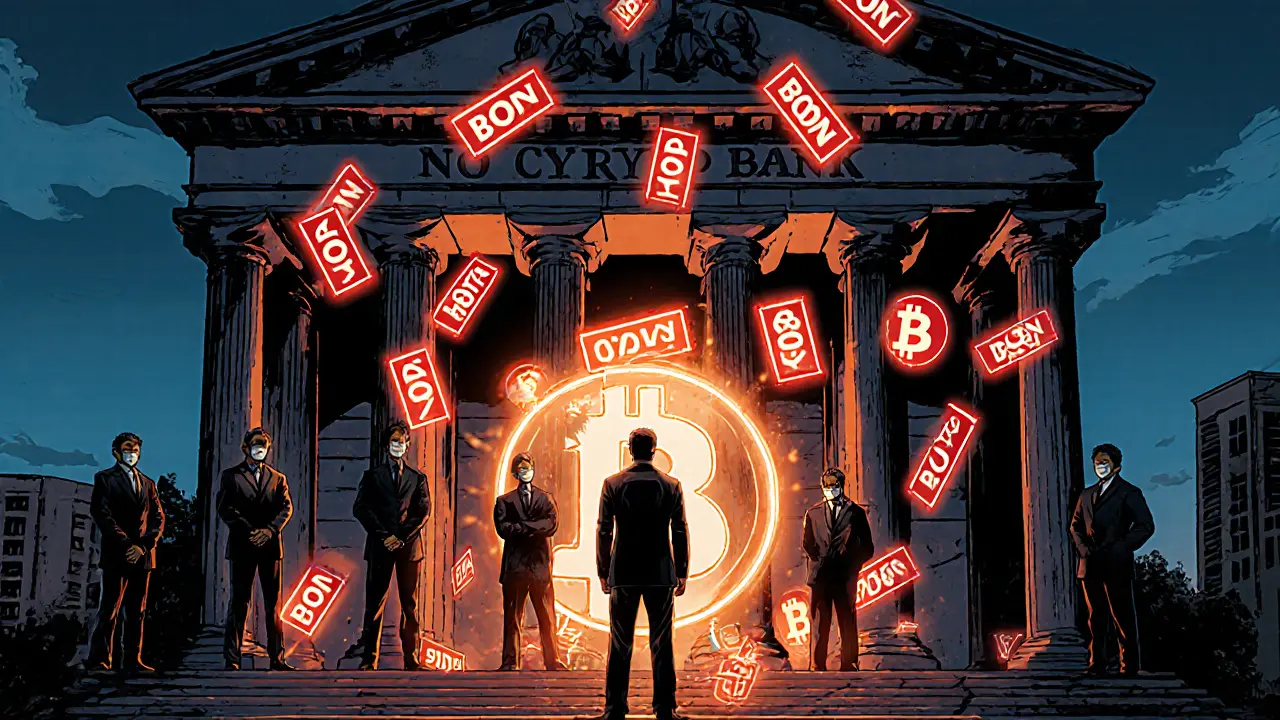
Namibia's banking system restricts crypto transactions despite a 2023 law licensing crypto businesses. As of 2025, individuals face account freezes, and no exchange is fully operational. The central bank maintains crypto isn't legal tender, creating a confusing regulatory limbo.