
When you hear about Sinverse token, a little-known crypto project with no public team, no whitepaper, and no real use case. Also known as SINVERSE, it’s one of hundreds of tokens that pop up overnight promising big returns—but vanish before anyone can cash out. This isn’t a new story. Every week, new tokens like Sinverse appear on decentralized exchanges, pushed by anonymous Telegram groups and fake Twitter accounts. They lure people with promises of airdrops, gamified rewards, or "exclusive access"—but they never deliver anything real.
What makes Sinverse token dangerous isn’t just that it’s worthless—it’s that it looks like something legitimate. The name sounds technical, the logo is polished, and the website might even have a "tokenomics" section. But dig deeper, and you’ll find zero GitHub activity, no audits, no liquidity locked, and no exchange listings beyond a few obscure DEXs with no trading volume. It’s a ghost token. And it’s not alone. Projects like Lenda (LENDA), a low-liquidity AI crypto project with no real development, and Battle Hero (BATH), a play-to-earn token that never launched followed the exact same pattern. They all rely on hype, not hardware. On noise, not networks. On fear of missing out, not fundamentals.
And here’s the kicker: Sinverse token is often tied to fake airdrops. People are told to connect their wallet, pay a small gas fee to "claim" tokens, and then disappear. Sound familiar? That’s exactly how WSPP, a fake poverty-help crypto scam operated. Or how THN, a token falsely advertised as a Throne airdrop tricked users into sending ETH to empty wallets. These aren’t bugs—they’re features of the scam model. The goal isn’t to build a product. It’s to collect wallets, drain funds, and vanish before anyone notices.
If you’re seeing Sinverse token on a CoinMarketCap or CoinGecko page, don’t be fooled. Those sites list tokens based on data feeds, not quality checks. A token can appear there even if it has $0 in daily trades and no team. That’s why you need to ask: Who’s behind this? Is there code? Is there activity? Is there a reason this exists beyond taking your money? Most of the time, the answer is no.
The crypto space is full of innovation—but also full of predators. Sinverse token is just one more example of how easy it is to create something that looks real but does nothing. You won’t find it in any serious DeFi protocol. You won’t see it on any regulated exchange. And if someone tells you it’s "the next big thing," they’re either lying or they’ve already sold their own holdings. Stay sharp. Check the team. Check the liquidity. Check the history. And if it feels too good to be true? It is.
Below, you’ll find real reviews of similar tokens, exchange scams, and airdrop traps that have cost people thousands. Learn from what went wrong—before you become the next statistic.
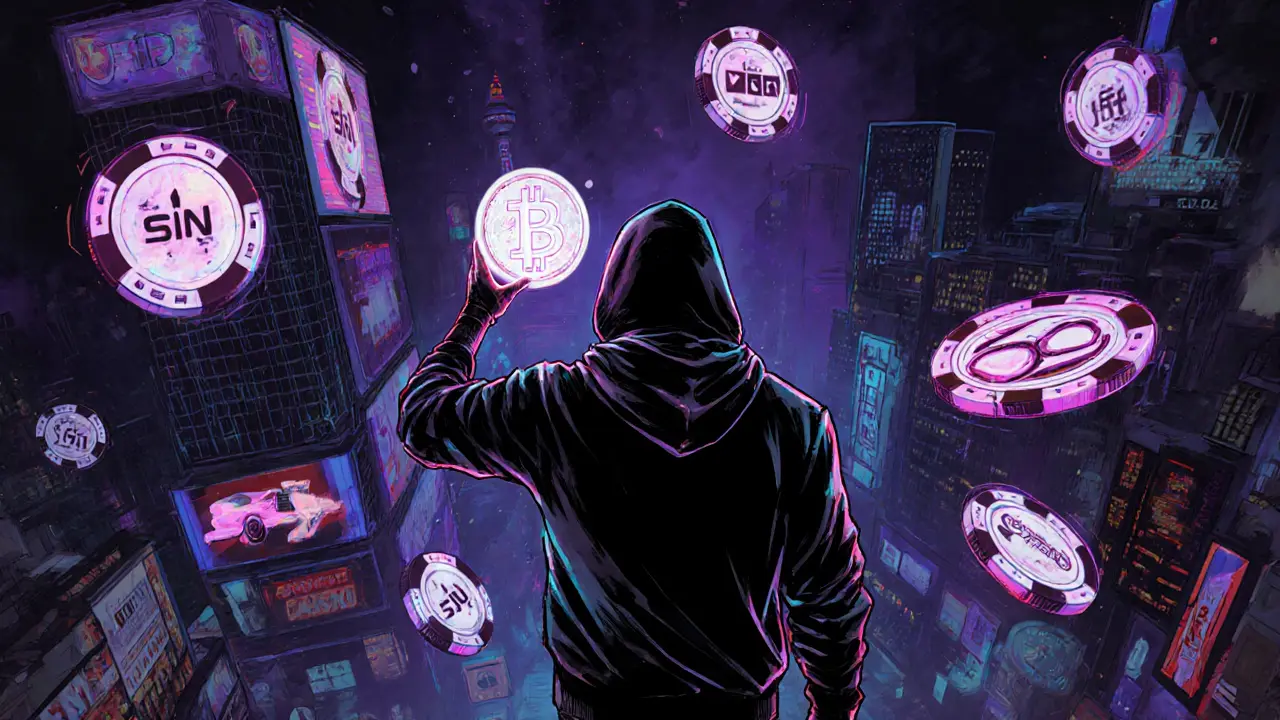
Sinverse (SIN) is a crypto token tied to Sin City, a metaverse game where players build underground empires. It's low-cap, high-risk, with no playable game yet. Learn what it really does - and whether it's worth your money.