
When you hear PEPE cryptocurrency, a meme-based token on Ethereum that gained traction through internet culture and speculative trading. Also known as PEPE token, it has no team, no roadmap, and no product—just a frog and a lot of noise. This isn’t a project. It’s a social experiment wrapped in a crypto ticker. People buy it because it’s funny, because their friend bought it, or because they saw a chart spike on a subreddit. But if you’re looking for fundamentals, you’re looking in the wrong place.
Memecoin, a category of cryptocurrency driven by viral trends rather than technology or utility. Also known as community tokens, it dogecoin, shiba inu, and brat all share the same DNA: no whitepaper, no revenue, no real use case. They live and die by hype, social media momentum, and whale activity. PEPE fits right in. It doesn’t solve problems. It doesn’t improve blockchain tech. It just rides the wave of online culture—and that’s exactly why it’s so volatile. You won’t find PEPE on major institutional platforms. It’s mostly traded on decentralized exchanges like Uniswap or PancakeSwap, where liquidity is thin and slippage is brutal. If you trade it, you’re not investing—you’re gambling on whether the next wave of traders will pay more than you did.
What’s interesting is how PEPE connects to other crypto trends. It thrives in the same spaces as decentralized exchanges, platforms where users trade directly without intermediaries, often hosting low-cap tokens with minimal oversight. Also known as DEXs, they’re the backbone of memecoin trading because centralized exchanges avoid them for compliance reasons. That’s why you’ll see PEPE listed on OraiDEX or YOOBTC in the posts below—but never on Binance or Coinbase. These are the same platforms where scams, dead tokens, and fake airdrops hide in plain sight. And PEPE? It’s not a scam, but it’s not safe either. The posts you’ll find here don’t praise PEPE. They don’t pretend it’s the next Bitcoin. They show you what’s real: who’s trading it, how it moves, and why most people who chase it end up losing. You’ll see how it compares to other memecoins like BRAT or SIN, how it behaves during market swings, and how exchanges handle it when regulators come knocking. This isn’t a guide to getting rich. It’s a guide to not getting wiped out.
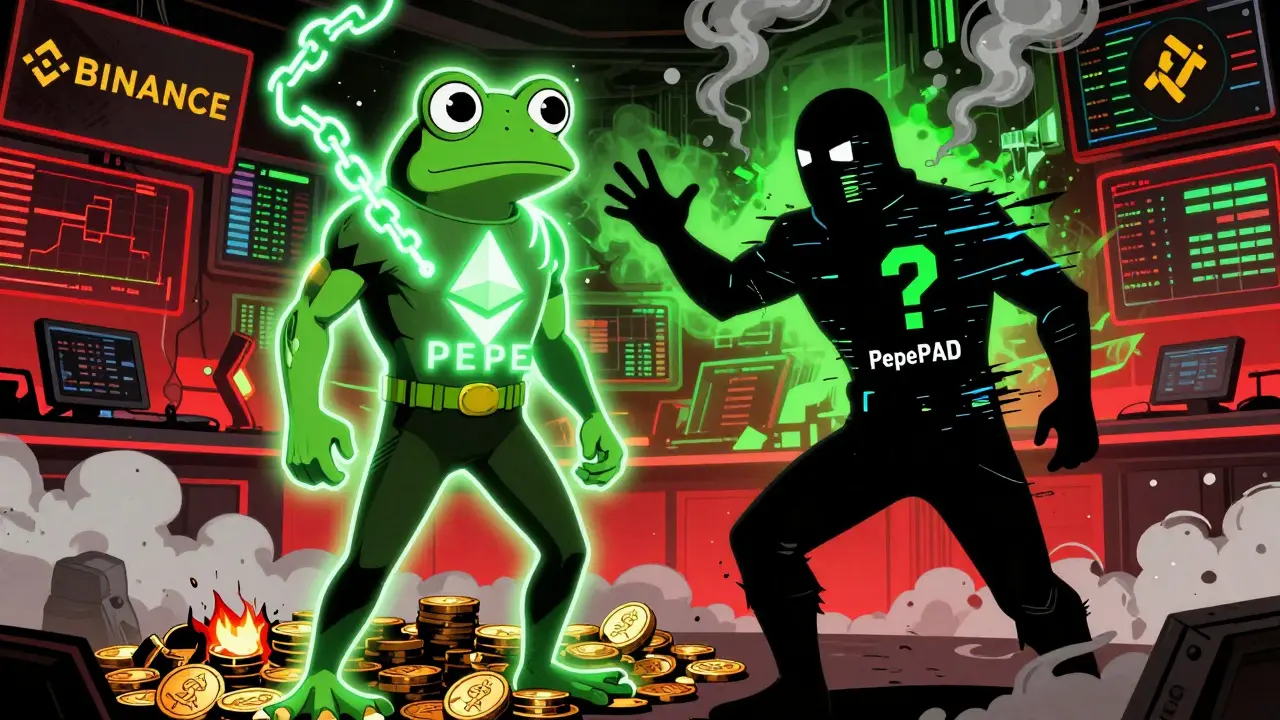
PepePAD is often confused with the popular PEPE meme coin, but they're not the same. PEPE is a real Ethereum-based token with a large community and trading volume. PepePAD has no verified listing, contract, or supply - and may be a scam.