
When it comes to Namibia crypto restrictions, the lack of official regulation creates a gray zone where crypto is neither legal tender nor illegal to own. Also known as crypto legality in Namibia, this situation forces users to navigate a system where banks refuse to touch digital assets but peer-to-peer trading thrives underground. Unlike countries that outright ban crypto like Nigeria once did, Namibia takes a hands-off approach—until it comes to banks.
That’s where central bank policies, specifically from the Bank of Namibia. Also known as BoN, it has repeatedly warned financial institutions not to facilitate crypto transactions. The result? Major banks like First National Bank and Nedbank block deposits and withdrawals tied to crypto exchanges. You can’t buy Bitcoin with your salary account. You can’t cash out Ethereum to your local bank. But you can still trade it—just not through traditional channels.
This is why P2P crypto trading, a method where buyers and sellers exchange crypto directly using cash or mobile money. Also known as localbitcoins-style deals, it’s the backbone of Namibia’s crypto scene. Platforms like Paxful and LocalCryptos are packed with Namibian traders. People meet in person, send mobile airtime, or use cash deposits to swap crypto. No bank account needed. No KYC. Just trust, speed, and cash.
What about exchanges? Most global platforms like Binance or Kraken don’t serve Namibian users directly. But that doesn’t mean Namibians aren’t using them. They sign up anyway—using VPNs, foreign IDs, or third-party payment processors. It’s not legal, but enforcement is nearly nonexistent. The government hasn’t shut down a single trader. No one’s been arrested for holding Bitcoin. The real risk isn’t jail—it’s losing your money to a scam because there’s no consumer protection.
And then there’s the crypto mining, a niche but growing activity fueled by cheap electricity and cooling-friendly temperatures. Also known as Bitcoin mining in Namibia, it’s mostly done by hobbyists with small rigs. There are no large mining farms here, but you’ll find people running ASICs in garages, especially in Windhoek and Swakopmund. The government doesn’t tax mining income—because they don’t track it.
Stablecoins? They’re quietly used to dodge currency volatility. The Namibian dollar is pegged to the South African rand, which swings with global commodity prices. Many traders use USDT to hold value between trades, then convert back to cash via P2P. No one reports it. No one audits it. It just works.
So what’s the real story? Namibia doesn’t have crypto restrictions in the way you’d expect. There’s no law saying you can’t own Bitcoin. But there’s a wall of silence from banks. A lack of legal clarity. No official guidance. No licensed exchanges. And no safety net if things go wrong. It’s a free-for-all—where users are on their own.
Below, you’ll find real reviews and warnings from traders who’ve been burned, dodged scams, or found workarounds. Some posts expose fake exchanges pretending to serve Namibia. Others show how people actually move money without banks. You won’t find government press releases here. Just the raw, unfiltered truth from people trading on the ground.
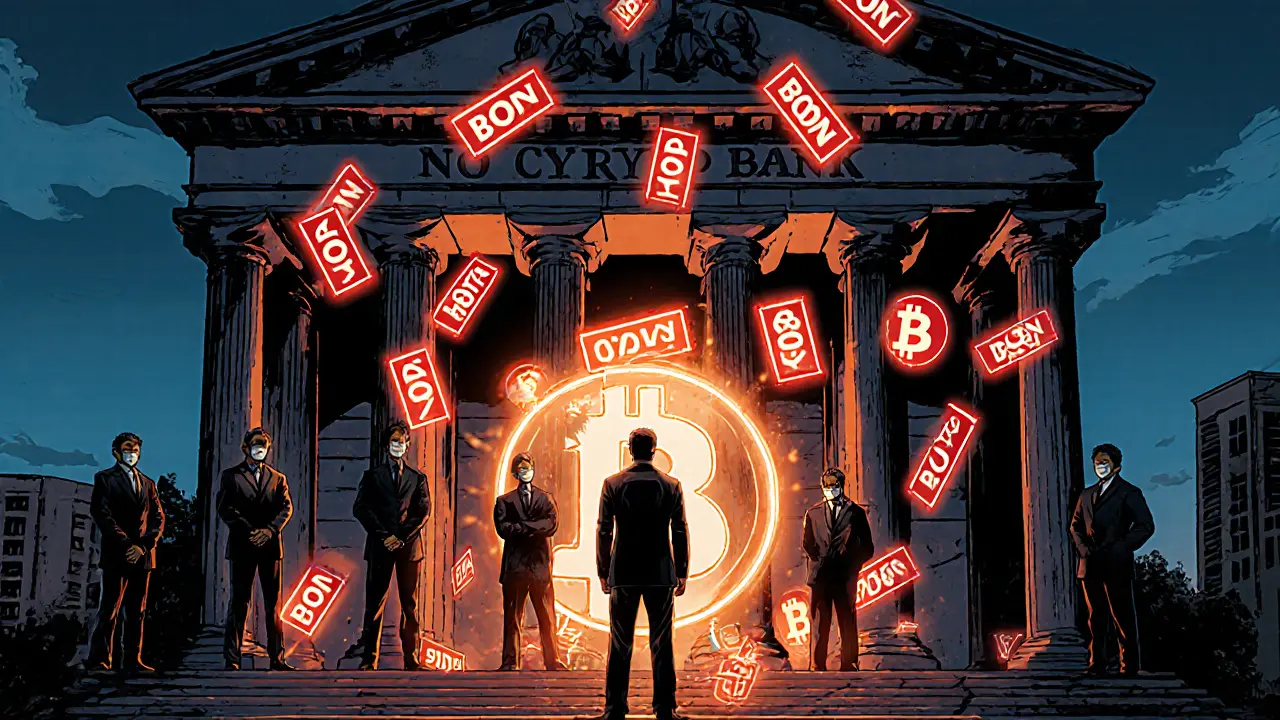
Namibia's banking system restricts crypto transactions despite a 2023 law licensing crypto businesses. As of 2025, individuals face account freezes, and no exchange is fully operational. The central bank maintains crypto isn't legal tender, creating a confusing regulatory limbo.