
When it comes to Bank of Namibia crypto, the official stance of Namibia’s central bank on digital assets. Also known as Namibia’s crypto policy, it reflects a cautious, restrictive approach that’s common among African central banks trying to balance innovation with financial stability. Unlike countries that embrace crypto as part of their financial future, the Bank of Namibia has never approved cryptocurrency as legal tender, and it explicitly warns banks not to handle crypto-related transactions. This isn’t just a suggestion—it’s a hard rule. Financial institutions in Namibia that support crypto trading or hold client funds in Bitcoin or Ethereum risk losing their licenses.
But here’s the twist: Namibians are still using crypto. Despite the ban, the country sees steady peer-to-peer trading, remittances through crypto, and even local exchanges operating in gray areas. People aren’t waiting for permission—they’re finding ways around the restrictions. This isn’t unique to Namibia. Similar patterns show up in Vietnam, a nation with strict crypto laws but over $91 billion in annual crypto inflows, and Taiwan, where banks can’t touch crypto but VASPs keep the market alive. In all these places, regulation lags behind adoption. The Bank of Namibia doesn’t have the power to stop people from buying Bitcoin on a decentralized exchange—it can only stop banks from helping them.
What you won’t find in official statements is the real story: how Namibians use crypto for survival. With high inflation, limited banking access in rural areas, and expensive international transfers, crypto isn’t a luxury—it’s a tool. People send money to family abroad using USDT. Gamers earn tokens in Play-to-Earn games and cash out via P2P platforms. Local traders use non-KYC exchanges like those discussed in posts about YOOBTC, a no-KYC crypto platform with thousands of trading pairs or BitMEX, a high-leverage derivatives exchange banned in the U.S. but still used globally. These platforms don’t need banks—they work on blockchain alone.
Meanwhile, the Bank of Namibia keeps watching. It’s not against technology—it’s afraid of chaos. A failed crypto project, a mass exit from local banks, or a money laundering scandal could destabilize the economy. That’s why they clamp down hard. But history shows that bans rarely kill crypto—they just drive it underground. The real question isn’t whether Namibia will allow crypto. It’s whether the Bank of Namibia will ever catch up to what its own citizens are already doing.
Below, you’ll find real reviews, regulatory breakdowns, and scam alerts from across Africa and beyond—each one showing how people navigate crypto when official channels say no. These aren’t theoretical debates. These are survival strategies.
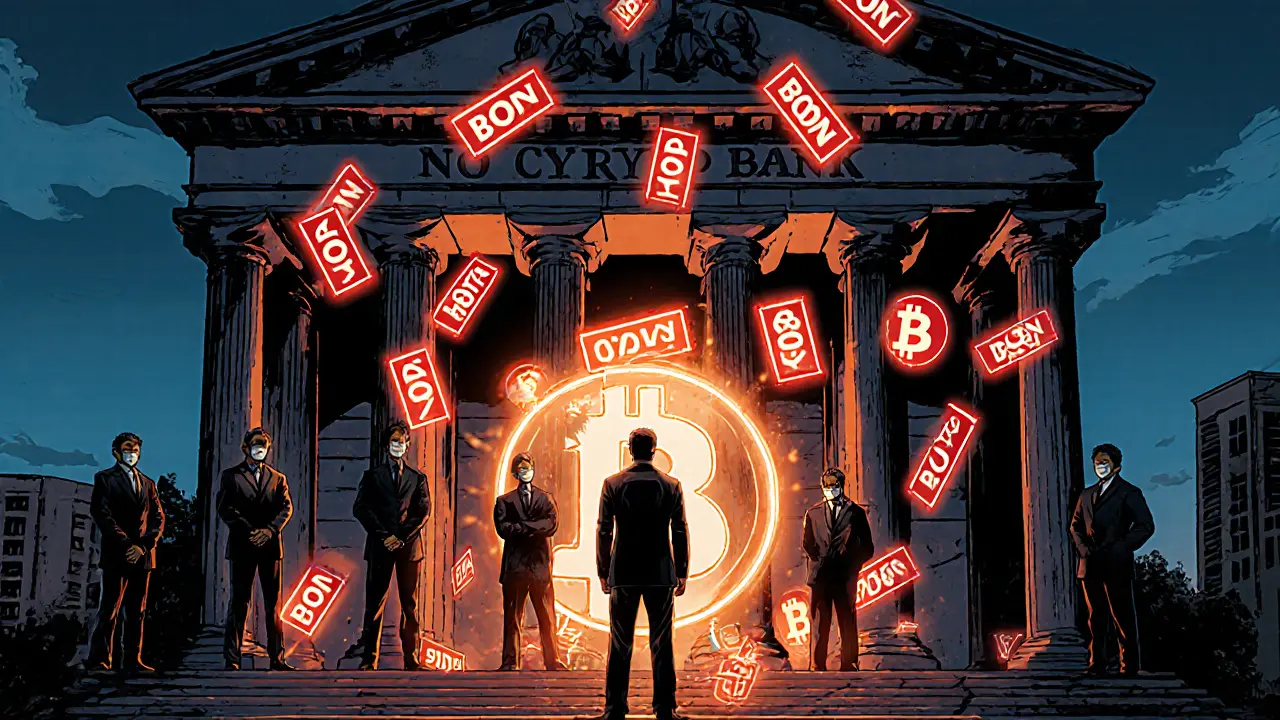
Namibia's banking system restricts crypto transactions despite a 2023 law licensing crypto businesses. As of 2025, individuals face account freezes, and no exchange is fully operational. The central bank maintains crypto isn't legal tender, creating a confusing regulatory limbo.